
Safety remains first priority among candy and costumes
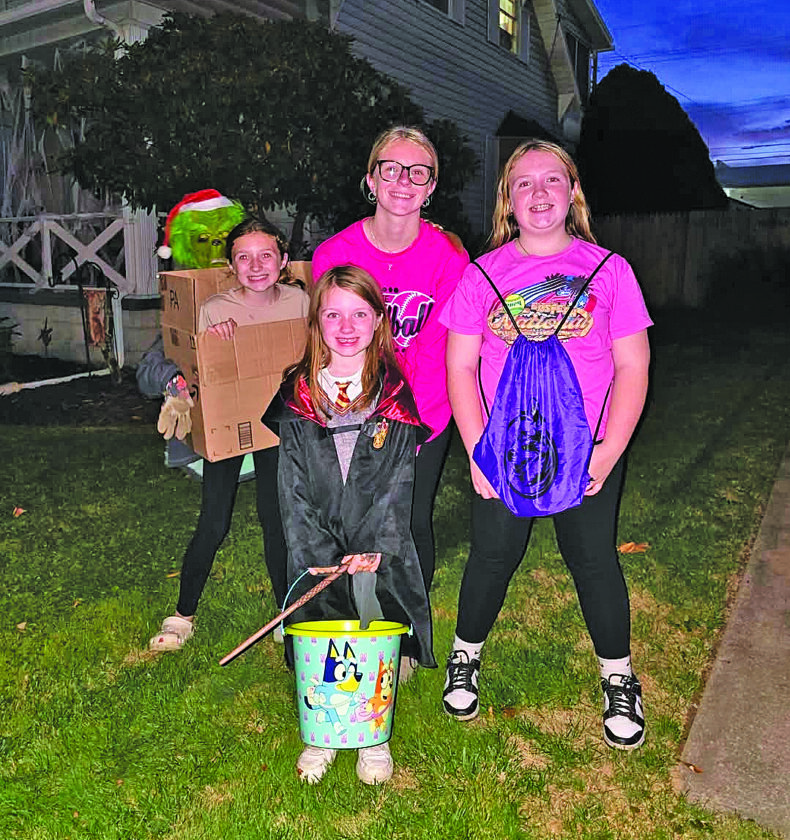
Photo courtesy of BAY FAMILY Braelyn Bay (from left) stands with sisters Jocelyn Sunderland and Olivia Bay, with Myla Bay in front, last year on Halloween.
LEWISTOWN — Like most moms, Stephanie Bay knows Halloween is an exciting time for youngsters, from the costumes to the candy.
The Lewistown woman has four daughters, ranging in age from 8 to 17, and will tell you as kids get caught up in the fun, they still need adult supervision and guidance to stay safe.
“As far as safety, we always walk with them and make sure they have some sort of light, glow sticks or something of that manner with them,” Bay explained of the approach she and husband, Rob, take with daughters, Jocelyn Sunderland and Olivia, Braelyn and Myla Bay.
Some of these tips are simply suited for this time of year, not just for trick-or-treating. As the fall months creep in and the evenings get darker earlier, children are at higher risk of being struck by vehicles, according to Geisinger.
On average, children are twice as likely to be hit by a car on Halloween than on any other day of the year, said Deborah Erdman, RN, injury prevention coordinator at Geisinger.
“Everyone loves a good scare at Halloween, but not when it comes to child safety,” Erdman said. “There are several easy and effective behaviors that parents can share with kids to help reduce their risk of injury.”
Erdman believes Halloween costumes can increase the risk of injury to children. She suggests following these tips when creating or selecting a costume:
Choose flame-resistant costumes
Always choose costumes that are labeled flame-resistant. If you’re a DIY enthusiast, choose flame-resistant fabrics like polyester or nylon for your homemade creations. This precaution helps protect against accidental contact with flames from candles or other decorations.
Be seen. Be safe
Kids can get excited at Halloween and might want to run from house to house. This can potentially cause injuries, especially if you’re trick-or-treating after dark.
“Dark conditions and increased crowds can also be a danger on Halloween,” Erdman added. Parents and caregivers need to provide active supervision throughout all the festivities.”
Make your child easily visible by selecting bright, reflective costumes. You can also add strips of reflective tape to their costume or treat bags or have them carry a light to increase visibility for drivers. Glow sticks are a fun alternative to reflective gear. Flashlights can also help them get into the Halloween spirit.
Talk with your kids about always watching for vehicles. Don’t let them dart out into the street, walk between parked cars or cross the street without looking both ways.
Prevent trips and falls
While a flowing cape or long dress might look dramatic, ensure costumes aren’t so long that they pose a tripping danger. Also, make sure masks do not obstruct a child’s vision.
“We really don’t have any restrictions as far as costumes,” Stephanie Bay said. “We have four girls, so their costumes have basically consisted of princess dresses or the latest Disney star.”
Choose the right makeup
If makeup or face paints are part of the costume, test them 24 to 48 hours before wearing them by applying a small amount to a patch of skin, such as the inner forearm. Watch for any signs of irritation, such as itchiness, rash, redness or swelling, which could indicate an allergy. And be sure to check the Food and Drug Administration’s list of color additives to ensure the dyes used in the makeup are approved for their intended use. Hypoallergenic face paints are recommended.
Check candy before eating
Food safety is just as important as having fun. Keep these simple, yet essential tips, in mind before trick-or-treating:
Inspect all candy at home. Throw out anything with an unusual appearance, discoloration, tiny pinholes or torn wrappers.
Watch for allergens. Always check labels for allergens and teach your children not to eat anything that isn’t in its original wrapper.
Remove choking hazards. For young children, remove choking hazards such as gum, hard candies, peanuts or small toys from their bags.
When passing out candy, it’s important to have a non-food alternative in case of allergies.
Keep hands clean
While trick-or-treating is part of Halloween fun for many kids, it can also be a prime way to spread germs. Kids tend to get sick around Halloween time because viruses are spreading. Always have children scrub their hands with soap and water for at least 20 seconds before eating candy.
Know your route
Before heading out, plan your route and let children know where they can go. Children should also be taught never to enter a stranger’s home and to approach houses only when they are well-lit. This usually indicates that the homeowners are welcoming trick-or-treaters and the area is safer.
Local News
Lewistown Community Choir recruiting singers for America250 concert
LEWISTOWN — The Lewistown Community Choir is seeking adult singers for a concert celebrating America’s 250th ...

One dead, several injured in Lewistown fire, ruled arson

United in Prayer

County recognizes corrections staff during national observance
In the region
Community Choir recruiting singers concert LEWISTOWN — The Lewistown Community Choir is seeking adult singers ...
Calendar
The Sentinel offers nonprofit and other community organizations an opportunity to promote upcoming events for free ...