
Biologist to discuss grouse, woodcock conservation
Lutz brings 25 years of wildlife experience to Towpath program
Trending
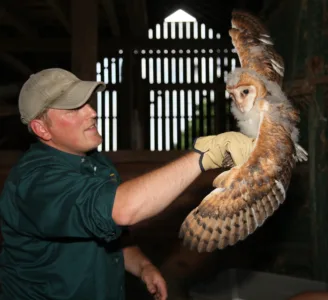
LEWISTOWN - Clayton "Clay" Lutz has spent his life paying attention to the outdoors. Long before he became a wildlife biologist, he was a kid in Blair County wandering the woods around Altoona, learning the rhythms of the seasons and the quiet details that make a forest feel alive.
The inquisitive Lutz hunted, fished and camped with parents who believed that time outside was not just recreation but something that shaped a person. Those early days planted the idea that the natural world was worth understanding, worth protecting and worth dedicating a life to.
That sense of connection stayed with him. When it came time to choose a career, Lutz knew he wanted to be outside. He wanted to work with wildlife, to understand how species survive and how landscapes change.
Science and research guided him into conservation, and the work carried him far beyond the ridges of central Pennsylvania. He spent time in Arizona, exploring the rugged country of the West, and traveled through the rain forests of Ecuador, seeing ecosystems that looked nothing like home yet stirred the same curiosity. Each place offered something new, but the woods and wild areas of Pennsylvania always felt like the place he belonged.
Over 25 years in wildlife conservation, including 19 as a wildlife biologist with the Pennsylvania Game Commission, Lutz has seen the field from every angle. He has worked with specialists across disciplines, tackled problems that shift from year to year and watched species rise, fall and sometimes recover in ways that remind him why the work matters. He said the most rewarding part of his job is building partnerships and knowing that the effort makes the world a little bit better.
Conservation is rarely simple, but it is deeply meaningful. You feel like you make a difference.
The Towpath Naturalist Society of Mifflin and Juniata County present Lutz's program, "Grousing About Woodcock: Habitat and Conservation of Both" on Tuesday, Sept. 8, at 7 p.m. at St. John's Lutheran Church, 120 N. Main St., Lewistown.
Some of those differences are easy to see. His first project out of college involved monitoring bald eagles, a species that had been pushed to the brink. At the time, nests were scarce and sightings were special.
Today, there are so many nests that biologists can't keep track of them all. It is one of the clearest examples of what can happen when agencies, communities and conservationists work together. The recovery of the bald eagle is a reminder that long-term effort can change the future of a species.
But conservation also brings challenges that never seem to stop. West Nile virus caused steep declines in several bird species. White-nose syndrome devastated bat populations.
New threats emerge, old ones evolve and biologists must constantly work to understand what is happening, how to stabilize populations and how to bring species back. Lutz said it can feel like a never-ending treadmill, but it is a treadmill filled with successes, lessons and moments that keep the work moving forward.
Two species at the center of that work are the American woodcock and the ruffed grouse. Both birds are woven into the identity of Pennsylvania's forests. Both depend on young forest habitat -- thick cover, regenerating growth and the early successional conditions that once occurred naturally across the landscape. As forests have aged and land use has changed, that habitat has become harder to find. Without it, woodcock struggle to nest and feed, and grouse lose the cover they need to survive.
Ruffed grouse face an added challenge. West Nile virus has hit the species hard, reducing survival rates and contributing to long-term declines. The Game Commission has spent years studying the virus's impact, tracking population trends and working to understand how disease, habitat and environmental factors intersect. Woodcock, meanwhile, have declined as young forest has disappeared, leaving fewer places for the small, secretive bird to thrive.
Lutz will bring all of this to the Towpath Naturalist Society, offering a clear, thoughtful look at what is happening to these birds and what conservationists are doing to help. He will explain how habitat work, forest management and partnerships with landowners can make a measurable difference, and why understanding these species is the first step toward protecting them.