
Residents voice data center concerns to county officials
Solicitor: Planning Commission has no authority over project
Trending
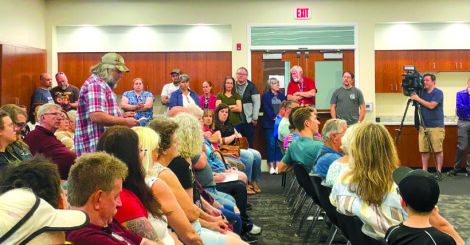
LEWISTOWN -- Residents packed a meeting of the Mifflin County Planning Committee on Thursday to voice concerns about a potential data center that has been widely discussed in Granville Township, despite county officials emphasizing that no formal proposal has been submitted.
The meeting, held at an alternate location to accommodate the anticipated crowd, focused on a draft Data Center Planning and Guidance Document prepared by the Mifflin County Planning and Development Department.
Planning Director James Lettiere said the document was created to provide municipalities, officials and residents with information about data centers, including potential benefits, concerns and regulatory considerations.
"We have not received any plan for a data center from Granville Township," Lettiere told attendees, encouraging residents to direct questions about local zoning and land-use decisions to their municipal officials.
Mifflin County Planning Commission Solicitor Steve Snook reiterated that the county planning commission does not have approval authority over any future project.
"If a plan is filed, we will comment, but this board will not decide yes or no about this," Snook said.
Several residents questioned whether the county could change ordinances to discourage or prevent data center development.
"This is the wrong place to be," Snook responded. "You need to be at your local township supervisors meeting."
His comments prompted objections from some audience members, who argued that township meeting schedules can make participation difficult for working residents.
Snook explained that the inclusion of "data centers" on the agenda led some residents to believe a specific project would be discussed. However, he said planning staff developed the guidance document proactively to help municipalities understand the issues surrounding data center development should proposals arise in the future.
The draft document, developed with research that included consultations with experts from Penn State Extension, examines the history and types of data centers, zoning and land-use considerations, potential economic impacts, and concerns related to traffic, energy use, noise, water consumption, lighting and environmental effects.
County officials stressed that the document neither supports nor opposes data center development.
"This guide is intended to provide as accurate information as possible based on our understanding," officials said during the meeting.
The draft is currently available for public review on the county's website and is expected to be forwarded to the Mifflin County Commissioners for consideration and recommendation.
During public comment, several residents said many of the concerns outlined in the guidance document -- including electricity demand, water consumption and environmental impacts -- reinforced their opposition to a potential data center.
Some speakers said they believe residents' interests are being overlooked in favor of economic development.
Combat veteran Chad Pheasant raised concerns about surveillance technologies associated with large-scale data operations.
Questions also focused on how a major data center could affect neighboring municipalities. Juniata Terrace Borough Secretary Caitlin Noland and Mayor John Wagner asked county officials to clarify potential impacts on regional water and electrical systems so they could better inform residents.
Planning staff said additional informational materials addressing frequently asked questions would be posted online.
Nathan Fisher told the committee he has collected nearly 3,000 signatures opposing a potential project in Granville Township, which has a population of roughly 4,600 residents.
Other residents, including Maggie Fellows, urged officials to preserve the area's natural resources and rural character, arguing that economic development should not come at the expense of the Juniata River Valley's identity.
The draft guidance document notes that hyperscale data centers -- large facilities often associated with cloud computing and artificial intelligence -- are among the most energy-intensive land uses. Individual facilities can require 50 to 100 megawatts of electricity or more, comparable to the energy consumption of a small city.
Because data centers operate continuously, the document states they may require new substations, high-voltage transmission connections and other infrastructure upgrades. The report also notes that increased demand could place pressure on utility systems and potentially contribute to higher costs.
Water use varies significantly depending on facility size and cooling methods. According to the document, consumption can range from relatively small amounts to more than 5 million gallons per day.
The report notes that the Mifflin County Municipal Authority serves approximately 11,700 customers and is permitted to produce up to 6 million gallons of water daily through a combination of withdrawals from Laurel Creek Reservoir and groundwater sources.
County officials emphasized that the guidance document is intended as an informational resource and should not be interpreted as an endorsement of any specific project.