
‘Homestead’ proves to be gripping post-apocalyptic film
Trending
Stories about survivors in a post-apocalyptic world continue to fascinate viewers in such streaming series as "Fallout" and "The Last of Us," but "Homestead" likely marks the first time such a scenario has been used for a faith-based movie.
And it's likely the first time a theatrical film in that genre has been used as the pilot for a TV series.
When Filipino terrorists unleash a nuclear bomb that obliterates Los Angeles, America is thrown into unprecedented chaos.
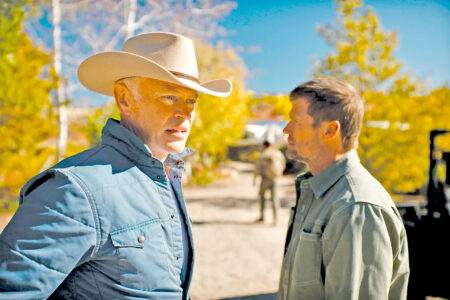
"Homestead" follows former Green Beret Jeff Eriksson (Bailey Chase) and his family as they escape to the Homestead -- a secluded survival haven owned by his wealthy friend Ian Ross (Neal McDonough).
With its self-sustaining gardens, stocked armory and endless food supplies, the compound is a prepper's paradise. But "Homestead" isn't simply about the comforts of bunkered survival; it digs into the darker side of fear-driven living and the steep ethical price of protecting oneself at all costs.
As violent threats and apocalyptic conditions approach their refuge, the residents of the Homestead must confront both external dangers and internal conflicts to survive.
"Homestead" -- from director Ben Smallbone -- turns out not to be another run-of-the-mill doomsday tale designed to validate hoarding canned goods and ammo after all. There's so much more lurking beneath the surface.
The story unfolds as a taut moral drama, centering on the conflict between Ian and his wife Jenna (Dawn Olivieri). Ian is adamant about keeping the gates closed to the desperate, starving masses gathering outside, fearing that helping them would jeopardize their resources.
On the other hand, Jenna argues passionately for compassion, believing their Christian values compel them to help those in need.
The tension only deepens with subplots that highlight the psychological toll of paranoia and survival.
One particularly harrowing sequence involves Jeff coercing another group member into a violent act against a perceived threat, with devastating fallout. It's a stark reminder of how easily fear can distort morality.
It's also odd not to see McDonough in a villainous role. In 2015, he was cast as the DC Comics villain Damien Darhk on the fourth season of "Arrow."
In 2012, he played a sadistic mobster from Detroit in FX's "Justified," and there was his portrayal as Dr. William Birkin, the lead villain in the popular video game "Resident Evil 2," in a live-action film adaptation of the first two Resident Evil games.
As a result of these accolades, he is especially considered one of the best "bad guy character actors" in the industry today.
"Homestead" was also released simultaneously with two streaming television episodes of the same name, which continues the storyline within the film. The series is currently slated to be eight episodes and streams exclusively on the Angel Studios website and mobile app.
As a precursor to an Angel Studios TV series, the film leaves several storylines dangling, making it feel incomplete as a standalone piece. While this approach might spark interest in the upcoming series, it dilutes the film's impact as a self-contained story.
Despite these shortcomings, it's still a gripping and well-crafted thriller and justifies a watch.
"Homestead," distributed by Angel Studios and produced by Radiate Films, Skies Fall Entertainment and 2521 Entertainment, is rated PG-13 for some violence and thematic elements. Running time: 112 minutes.
•••
Greg Williams is a reporter and Weekend Editor for The Sentinel. A Mifflin County native, he has been writing for The Sentinel since 1991.