Spotted lanternfly considered nuisance pest
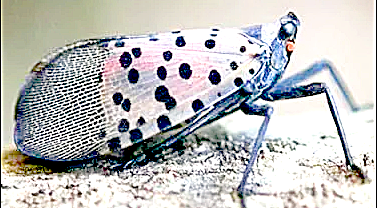
Submitted photo
Pictured is a spotted lanternfly.
LEWISTOWN — Spotted lanternflies continue to be a nuisance as the invasive species feeds off of our economy — but perhaps in lower numbers than in previous years, according to representatives from Penn State Extension.
Spotted lanternflies were originally detected in Berks County in 2014, however, there was not a widespread of awareness until 2017 when researchers working on spotted lanternflies as well as the PA Department of Agriculture and grape growers in the Berks area noticed an alarmingly high number of egg masses in the spring, then high numbers of nymphs in the early summer.
“In general, when we see an area with a heavy infestation, that typically lasts a few years and then numbers seem to drop down,” explained Julie Urban, Penn State Extension Office’s lead scientist in spotted lanternfly research.
Researchers have inferred that this cycle may be due to the fact that after a few years of heavy feeding on the sap of trees, the resources of the trees begin to diminish, causing the invasive species to relocate to another area with greener pastures.
Spotted lanternfly populations do tend to be patchy, as they continuously move, feeding off various different hosts in the span of their lifetimes and depending on the area and the surrounding environment.
Urban explained that spotted Lanternflies can oftentimes be overlooked as one of the preferred hosts for this invasive species is the tree of heaven which tends to grow in disturbed habitats like along interstates and railroad lines and is not often in areas people frequent.
“Research and observations recorded to date have shown us that on most trees (spotted lanternflies) feeding does not outright kill a tree, it’s more of a stressor for the tree,” explained Urban.
Spotted lanternflies are known to feed off of over 130 plant and tree species, and although they don’t damage most of the plants, the species is a danger to grape vines specifically.
“Their late season movement, which occurs in September to October is when people are most likely to report them as a problem,” explained Urban.
Although spotted lanternflies do not cause any bodily harm they are a severe nuisance.
According to the Penn State Extension website, as they feed, spotted lanternflies excrete honeydew which is a sugary substance that can attract bees, wasps, and other insects. The honeydew also builds up and promotes the growth of sooty mold (fungi), which can cover the plant, forest understories, patio furniture, cars, and more, which in most cases is an eye-sore for homeowners.
When asked about dangers or damages caused by the invasive species, Urban explained that they are considered a nuisance pest, mainly due to “people being freaked out by their relatively large size or by their high numbers in some cases.”
The Penn State Extension Spotted Lanternfly management guide offers a range of options of what to do in the case of an infestation, but it’s important to remember- you can always help out by squashing the invasive species when you see one — or many.
Local News

Hometown ties shape national preservation effort
Calendar
Reserve Now: •Mifflin County Chapter PASR luncheon meeting — noon, Thursday, May 7, Birch Hill Event Center, ...
FIFA fans can ride SEPTA for free after World Cup matches in Philly
By John Cole | The Center Square contributor (The Center Square) – Soccer fans leaving Lincoln Financial ...
Mount Nittany Health to host Community Day
STATE COLLEGE — Mount Nittany Health will host its second annual Community Day on Saturday, May 2, at its ...

Eco Challenge