
Trending
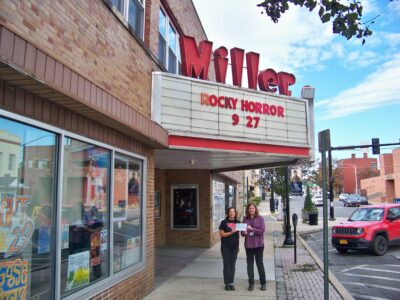
Over the past decade, DLI's efforts have funneled $67,163 in facade grants into local properties, which sparked more than $173,000 in direct private investment--a 2.5-to-1 ratio of private to public dollars, according to Executive Director Jim Zubler.
"These are dollars intended to help business and property owners implement long-lasting, appropriate improvements," Zubler said. "It's about creating the incentive to take the next step, to reinvest in our downtown buildings and make them assets for years to come."
Over 25 years, DLI has overseen 57 facade improvements, each one another step in a steady, deliberate campaign to make downtown more inviting, functional, and resilient.
Zubler described how the program's public investment unlocks private initiative. "Facade grants are just one part of a package of incentives in place to encourage further investment," he said.
Each grant--up to $5,000 as a matching reimbursement--requires the property owner to put real skin in the game, multiplying the effect of each state or local dollar. "With every project, we want to see the property not only look better but also meet all code requirements, so there's no barrier to future business or occupancy. That's a direct outcome for this minimal public outlay."
Once a project is completed, DLI works with the Borough Codes Office to make sure all upgrades are up to standard, and the process brings older buildings into line with current expectations for safety and accessibility.
Recent years have seen the most visible momentum. Zubler pointed to key projects like the full rehabilitation of 19 and 21 South Brown Street, now home to eight businesses or offices and four apartments. The 21 South Brown Street project, in particular, stands out as an emblem of Lewistown's resurgence.
"These projects are indicative of the momentum that has been building over the past six or seven years," Zubler said. "Since then, downtown has seen the addition of 41 businesses that are still in business."
Projects like the Geisinger School of Nursing--located in the renovated former Bon Ton Department Store--have been transformative, both for their scale and for their impact on the community.
"The opening of the Geisinger School of Nursing, the addition of upwards of 125 new or refurbished apartment units in downtown alone, and the conversions of large formerly vacant spaces for new business locations--the trajectory remains vibrant," he said. "My role is to work with property and business owners to take advantage of the incentives that together we have worked to put into place."
These incentives have gone beyond simply making storefronts more attractive. The former Capperella Furniture store, once 12,000 square feet of empty space, now has four occupied commercial units. The old Foss Jewelers location, previously 3,000 square feet, now houses four businesses. Kaur/Direct Dental Care relocated to the former CVS building, which provided 11,000 square feet of office space.
"Each project adds to the attractiveness, which, taken together with business developments, streetscape, and infrastructure upgrades, makes downtown a more viable space that people want to visit," Zubler said. "With conversions like these, forward momentum is clearly evident."
DLI has about $26,000 in facade grant funding available and is working with property owners on new projects.
"With the exception of one additional project that is currently under construction, our list of projects is open," Zubler explained. "I am currently working with two property owners on renovations to large formerly vacant spaces, which will see the addition of 55 new employees to downtown by the end of November."
Those projects include the Sentinel's relocation to 21 South Brown Street and the expansion of Skills of Central Pennsylvania to the Regional Business Center. Zubler noted that the application process can be demanding--requiring site meetings, detailed inspection reports, and at least three contractor bids per recent state requirements--but said DLI's goal is to minimize frustration. "Our applicants will tell you that documentation is arduous, but hopefully at the end of the project, they see a positive outcome," he said.
Zubler walked through the steps: "Typically, applicants will reach out with a crucial first step to meet them on site to hear what they're proposing. Once we've opened a dialogue, I'll bounce some ideas off them and walk them through the application process, which entails completing the simple application and beginning the review schedule. Once we have an application in hand, the Borough Codes Office and I inspect the property for any code deficiencies, with an inspection report prepared by me and verified by the Codes Office. Next, we'll present this report to the property owner so a scope of work can be identified and shared with contractors."
If the owner uses their own labor, reimbursement is only for the cost of materials. Once the bids are in, the DLI Design Committee, comprised of community volunteers, meets with the applicant, reviews the project's impact, and makes a recommendation to the board.
If approved, a formal award letter and contract are issued, and the project can move forward. Once completed, the applicant submits receipts for reimbursement, and DLI forwards the request to the state. "Payment is usually made within 45 days," Zubler said, though he acknowledged,
the "orchestration of details can cause frustration for property and business owners, which I attempt to minimize as much as possible."
The results, he said, are more than visible; they're measurable. "Property Manager Mike Buffington has stated that these facade reimbursements are incentives to encourage a greater level of improvement, which he may not have undertaken otherwise," Zubler said.
By fostering investment in both exterior and interior upgrades, the program encourages property owners to create spaces that attract new tenants, reduce vacancies, and boost business performance. The density of new businesses and residents downtown creates a self-reinforcing cycle: more people, more activity, and greater interest from other potential investors.
"The location of businesses and their employees has a demonstrative impact on continued growth with an audience of people located in close proximity to other establishments," Zubler said.
Sustaining the program has required more than state dollars. "Downtown Lewistown, Inc. is an anomaly in Pennsylvania with a strong base of private support, which has enabled our work to continue for two and a half decades where other communities have struggled to maintain a program," Zubler said.
He pointed out that DLI maintained its operations without the aid of state funding for upwards of 10 years, including during the lean Covid years. "With the provision of state funds, we anticipate being able to sustain the organization well past the five-year designation," he said.
DLI's resilience has earned it recognition as an Enterprise Zone and as a Main Street Matters community, proof, Zubler believes, that "steady, local support can bridge the gaps and keep downtowns moving forward even when other resources run dry."
For Lewistown, the investment in facades isn't about sprucing up old brickwork or replacing faded awnings. It's about creating an environment where businesses can grow, people want to live and work, and downtown feels like the beating heart of the community.
"Each project we take on," Zubler said, "is an opportunity to show what's possible downtown." With continued support, DLI aims to keep this momentum going--one storefront at a time.days," Zubler said, though he acknowledged the "orchestration of details can cause frustration for property and business owners, which I attempt to minimize as much as possible."
The results, he said, are more than visible; they're measurable. "Property Manager Mike Buffington has stated that these facade reimbursements are incentives to encourage a greater level of improvement, which he may not have undertaken otherwise," Zubler said.
By fostering investment in both exterior and interior upgrades, the program encourages property owners to create spaces that attract new tenants, reduce vacancies, and boost business performance. The density of new businesses and residents downtown creates a self-reinforcing cycle: more people, more activity, and greater interest from other potential investors.
"The location of businesses and their employees has a demonstrative impact on continued growth with an audience of people located in close proximity to other establishments," Zubler said.
Sustaining the program has required more than state dollars. "Downtown Lewistown, Inc. is an anomaly in Pennsylvania with a strong base of private support, which has enabled our work to continue for two and a half decades where other communities have struggled to maintain a program," Zubler said.
He pointed out that DLI maintained its operations without the aid of state funding for upwards of 10 years, including during the lean Covid years. "With the provision of state funds, we anticipate being able to sustain the organization well past the five-year designation," he said.
DLI's resilience has earned it recognition as an Enterprise Zone and as a Main Street Matters community, proof, Zubler believes, that "steady, local support can bridge the gaps and keep downtowns moving forward even when other resources run dry."
For Lewistown, the investment in facades isn't about sprucing up old brickwork or replacing faded awnings. It's about creating an environment where businesses can grow, people want to live and work, and downtown feels like the beating heart of the community.
"Each project we take on," Zubler said, "is an opportunity to show what's possible downtown." With continued support, DLI aims to keep this momentum going--one storefront at a time.