Juniata High students complete trafficking education seminar
The Abuse Network spreads awareness
-
-
Sentinel photo by SIERRA BOLGER
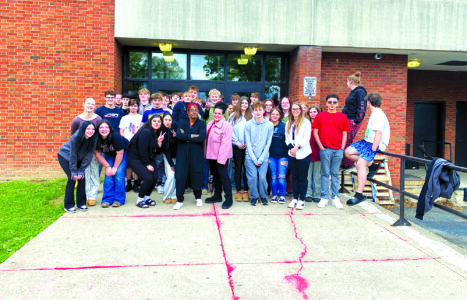
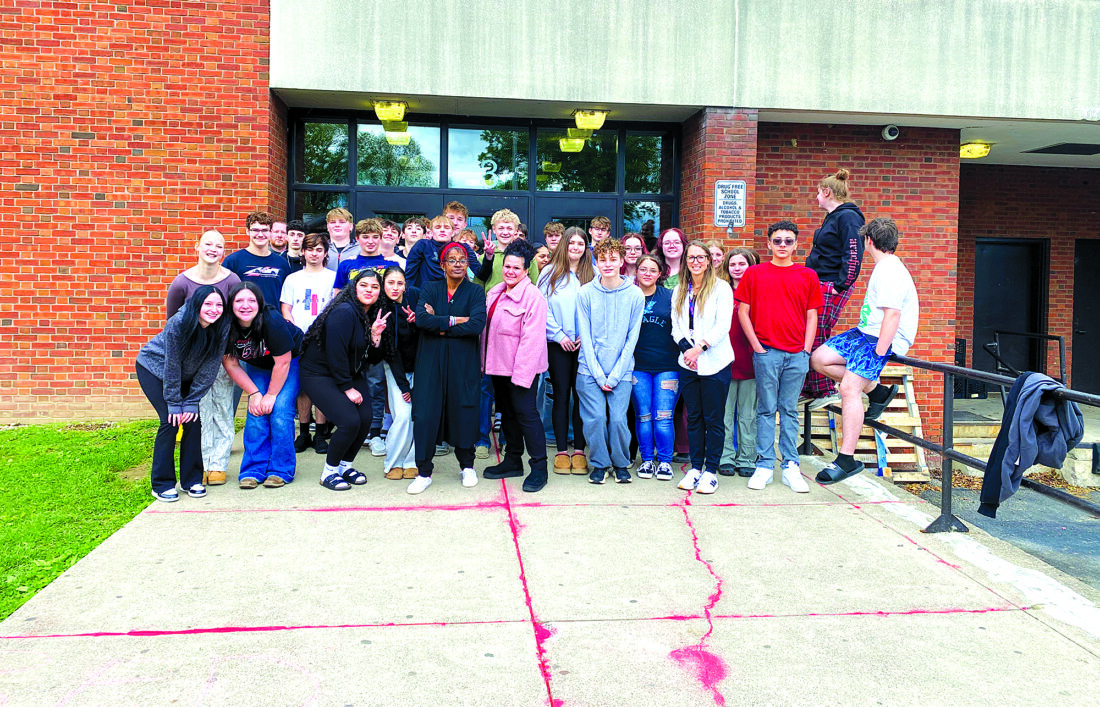
Juniata High School ninth-grade students stand with representatives from The Abuse Network after spreading red sand through the cracks of the sidewalk that line the school to raise awareness for human trafficking victims who may fall through the cracks on Thursday.
-
-
Sentinel photo by SIERRA BOLGER
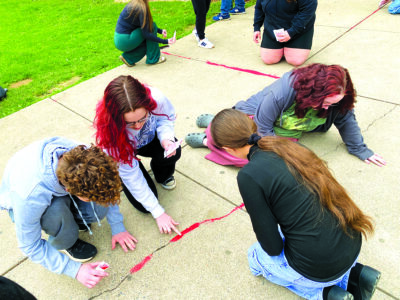
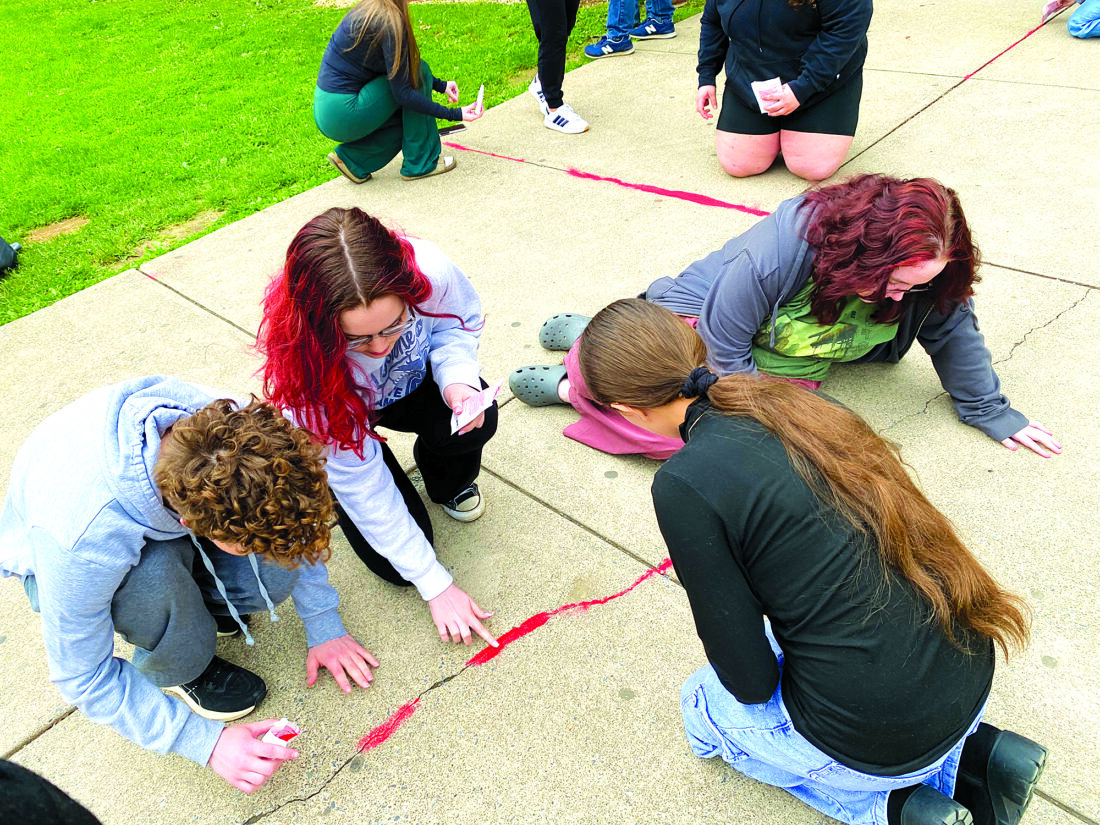
Luke Weinand, Rylee Bryner, Elaina Hummel and Amaya Diaz fill cracks of the sidewalk with red sand.
-
-
Sentinel photo by SIERRA BOLGER
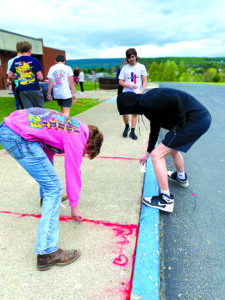
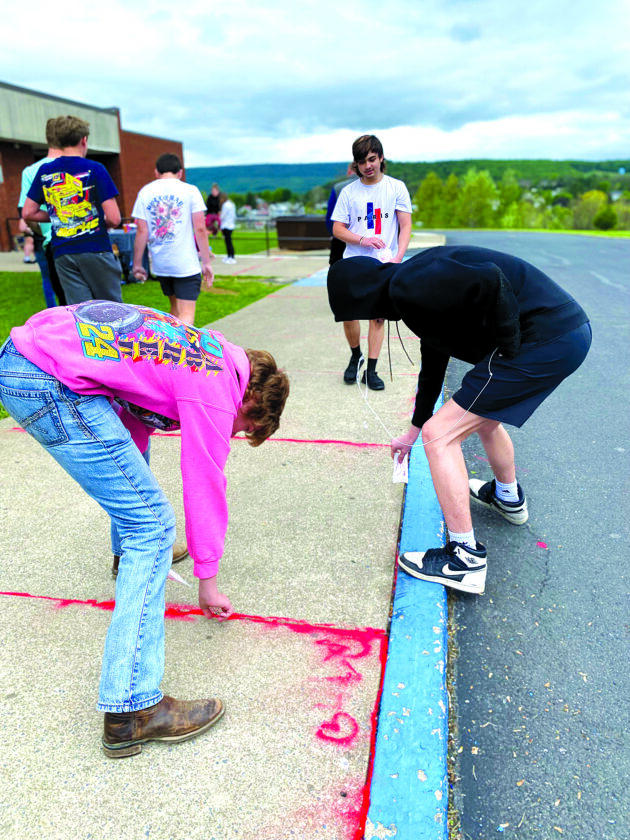
Kaiden Goshorn and Noah Fike spread red sand in between the sidewalk.
Sentinel photo by SIERRA BOLGER
Juniata High School ninth-grade students stand with representatives from The Abuse Network after spreading red sand through the cracks of the sidewalk that line the school to raise awareness for human trafficking victims who may fall through the cracks on Thursday.
MIFFLINTOWN — Ninth-grade students at Juniata High School wrapped up an extensive human trafficking education seminar from The Abuse Network with a “Red Sand Project” on Thursday to spread awareness for victims who may fall through the cracks.
The Abuse Network has been providing human trafficking prevention programs in classes in Juniata, Mifflin and Huntingdon counties for some time now.
Public Training Coordinator Rebecca Wills and her colleague Ann Wagner of The Abuse Network worked with Juniata High School students for three days. They presented information on how to identify trafficking, how people are being recruited, and how it happens in rural areas.
“One in four human trafficking victims are children, with the average age of recruitment often cited as 12 to 14 years. And, learning about trafficking is the first step in prevention of this crime, so this education in the schools is critically important,” shared Wills.
Wills shared that among their efforts to teach what human trafficking is, how to recognize it, and how to access help, they spend time helping youth recognize that kids are predominantly recruited online, as almost all kids spend time online engaging in social behavior.
Sentinel photo by SIERRA BOLGER
Luke Weinand, Rylee Bryner, Elaina Hummel and Amaya Diaz fill cracks of the sidewalk with red sand.
“Traffickers are very adept at recruitment in the online setting, and children often don’t realize they are being engaged for trafficking purposes. Additionally, learning that traffickers can be any gender or can play any role needed to lure the child are important parts of the educational process,” added Wills.
According to the training, traffickers can also be someone in the child’s life, such as a family member or even a friend, and only about 1% of victims are recruited by a complete stranger.
“If the trafficker is a stranger, they may take a great deal of time getting to know the victim and grooming them so they are more susceptible to being trafficked,” said Wills.
She added that becoming familiar with trafficking tactics will help youth identify trafficking situations before they fall victim to the trafficker’s efforts to recruit them.
To wrap up this training, students participated in the “Red Sand Project” to raise awareness of the issue.
Sentinel photo by SIERRA BOLGER
Kaiden Goshorn and Noah Fike spread red sand in between the sidewalk.
This project was created by Molly Gochman in 2014, after realizing the depths to which human trafficking and modern slavery continue to be an issue.
According to statistics, an estimated 50 million individuals are being trafficked or living in modern slavery, whether in forced marriages, forced labor, or for sexual exploitation. Gochman recognized that public awareness and engagement would be essential in finding a solution.
The “Red Sand Project” reinforces the themes of awareness and recognition, as well as understanding how to access help. The participants come together to review key themes related to trafficking.
They are then asked to fill in pavement or sidewalk cracks with red sand. The red sand symbolizes victims and survivors of human trafficking who can fall through the cracks, largely because they have little knowledge of trafficking or how to access help.
For more information, visit abusenetwork.org.
Local News
Calendar
The Sentinel offers nonprofit and other community organizations an opportunity to promote upcoming events for free ...
Ward and Benninghoff announce Keystone Historic Preservation Grant
HARRISBURG — Sen. Judy Ward (R-30) and Rep. Kerry Benninghoff (R-171) announced Mifflin County has been awarded a ...
State grant powers collaborative EV build at Academy
Local titleholders shine at Miss Pennsylvania Scholarship Pageant
YORK, Pa. — Under the lights of the historic Apollo Theatre on Saturday night, four young women with ties to the ...
QUITE A CATCH
Jordan Lovejoy, of Annapolis Md., captured a sweep with a Triple Crown title at the Juniata Regatta in the Juniata ...