
Cataclysmic explosion claims life of local WWII Paratrooper
Stories Behind the Stars
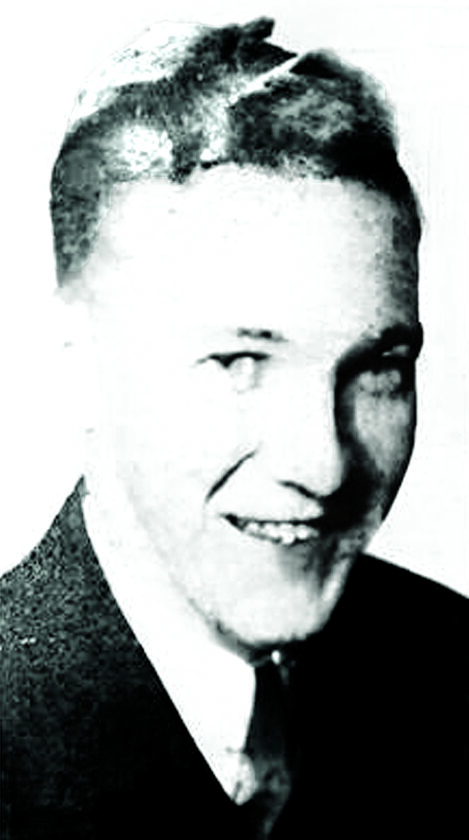
Chester D. Dillon.
LEWISTOWN — The American recapture in World War II of Corregidor Island from the Japanese garrison in the Philippines began with a daring, highly risky parachute drop by the 503rd Parachute Regiment on Feb. 16, 1945. A local man was among the brave paratroopers assigned to the mission.
Chester Dennis Dillon was born on Oct. 26, 1922 in Newton Hamilton to Chester Daniel and Mary Matilda Zeigler Dillon. He had two older brothers, Eugene Wesley and Richard Earl. Tragically, his father died in an accident while working for the Monongahela Division of the Pennsylvania Railroad before Dillon even knew him. Dillon’s mother remarried hardware salesman Charles Freeburn before Dillon’s eighth birthday.
Dillon completed two years at Mount Union High School and became employed by the Arts Craft Shirt Company in Lewistown. By 1940, Dillon was working in the kitchen of a Civilian Conservation Corps project.
Dillon enlisted in the Army at Harrisburg on June 10, 1942. He completed basic and advanced individual training at Camp Wheeler, Georgia and Fort Benning, Georgia.
Dillon was in the 503rd Parachute Regiment’s 1st Battalion and endured heavy rifle and machine gun fire during his amphibious landing at Corregidor on Feb. 17, 1945. He joined the rest of the regiment topside of “the Rock” to begin the brutal task of dislodging fanatical enemy forces from heavily fortified tunnels.
Dillon was no stranger to fierce combat. He was deployed to the Pacific Theater in December 1943 and fought in New Guinea’s jungle warfare. Dillon received a commendation for aiding an ambushed patrol on July 16, 1944 during the eight-week Battle of Noemfoor, Dutch New Guinea.
The recapture of Corregidor was far different. The battle largely involved close-quarters combat and immense risk by American troops to clear determined Japanese defenders from tunnels and fortifications. A crucial area of the battle was Monkey Point, where a network of tunnels housed the Japanese Navy’s Radio Intercept Station. Dillon was part of the mopping-up operation at Monkey Point on Feb. 26, 1945. Suddenly, at 11:05 a.m., cataclysmic explosions ripped off the top of Monkey Point’s ridge.
Dillon was killed in action when he was crushed in the Monkey Point explosion on Feb. 26, 1945. He was one of 166 American casualties, including 52 deaths. Among the Americans to perish were the Sherman tank crew from “Murder, Inc.” Over 200 Japanese died in the blast. It was never conclusively determined whether the pillboxes were detonated by suicidal Japanese defenders or by the American tanks’ firing. American troops succeeded in recapturing Corregidor by the end of February 1945.
Dillon’s remains received temporary burial in US Armed Forces Cemetery No. 1, Mariveles, Bataan. He was re-interred after the war in US Armed Forces Cemetery Manila No. 2. Dillon received final burial in summer 1948 in plot L, row 14, grave 68 at the Manila American Cemetery and Memorial, Philippines. A cenotaph was placed in Dillon’s honor at Newton Hamilton Memorial Cemetery, Newton Hamilton, Pennsylvania. Dillon posthumously received the Purple Heart.
•••
Stories Behind the Stars memorials are accessible for free on the internet and via smart phone app at gravesites and cenotaphs. The non-profit organization is dedicated to honoring all 421,000 fallen Americans from World War II, including 31,000 from Pennsylvania. To volunteer or for more information, contact Kathy Harmon at kharmon@storiesbehindthestars.org or visit www.storiesbehindthestars.org.
Local Columns
Cataclysmic explosion claims life of local WWII Paratrooper
Changes in how anglers check water conditions
For years, the United States Geological Survey stream gauges have been a part of fishing in Pennsylvania streams ...
Let’s go to church
People wonder why Christians go to church. When I talk about Church I’m not talking about a building per se. ...
God had a plan, purpose to redeem men
And in you all the families of the earth shall be blessed. Genesis 12:3 If I understand the Dispensational view ...
Free public computer and Wi-Fi available at JCL
Do you need a full-screen computer to type a document, browse a website, or complete another task? The Juniata ...
‘Love Your Library’ this month at MCL
Happy Valentine’s Day! As you are remembering your loved ones this Valentine’s Day, whether with chocolate or ...