
Beaver Stadium revitalization enters next phase
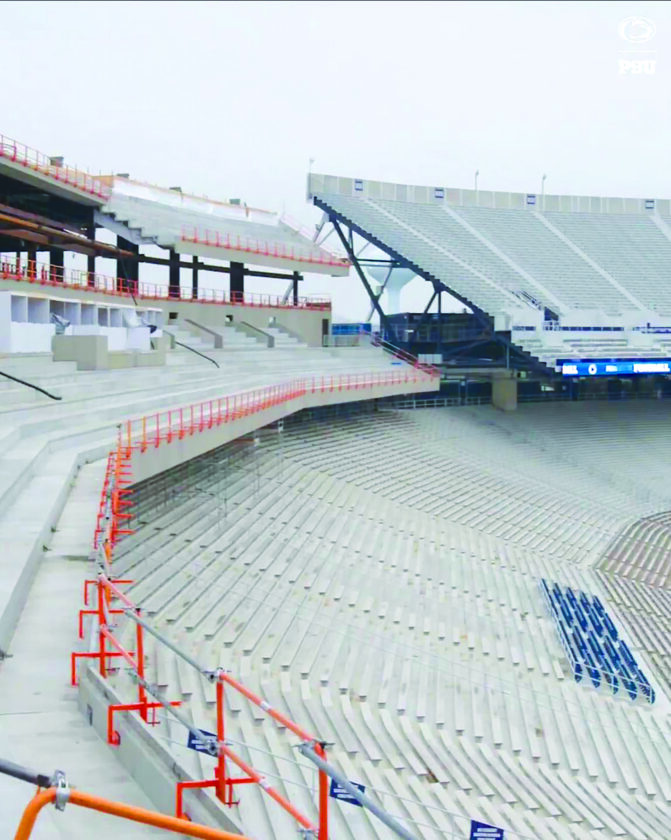
Photo courtesy of PENN STATE ATHLETICS<br> Work continues on the seating areas at Beaver Stadium.
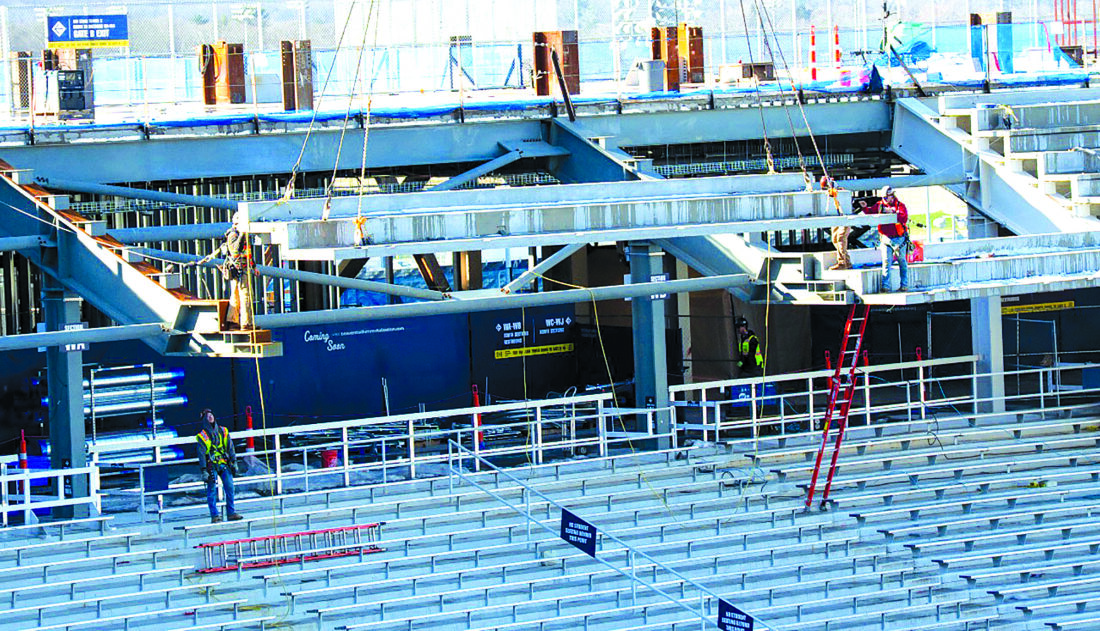
Photo courtesy of PENN STATE ATHLETICS<br> Work continues on the seating areas at Beaver Stadium.
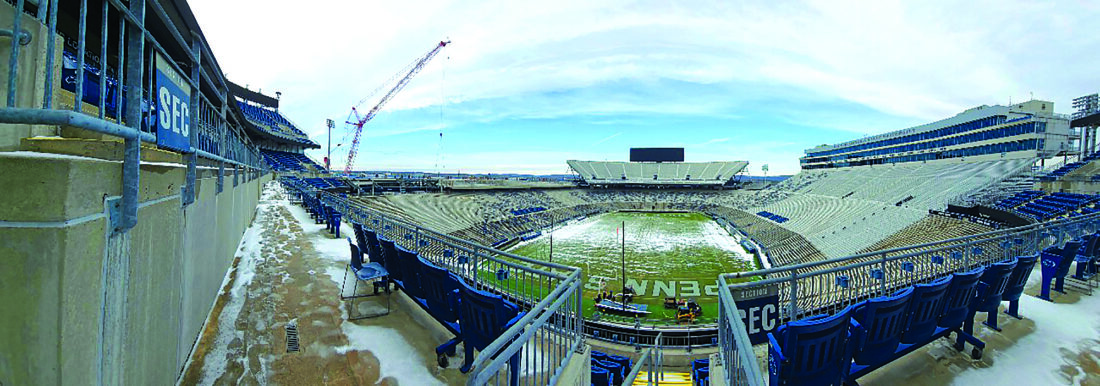
Photo courtesy of PENN STATE ATHLETICS<br> An overall glance at Beaver Stadium, with construction machines working on the one side.
Photo courtesy of PENN STATE ATHLETICS<br> Work continues on the seating areas at Beaver Stadium.
Photo courtesy of PENN STATE ATHLETICS<br> Work continues on the seating areas at Beaver Stadium.
Photo courtesy of PENN STATE ATHLETICS<br> An overall glance at Beaver Stadium, with construction machines working on the one side.
Trending
UNIVERSITY PARK -- Penn State fans returning in August will find Beaver Stadium looking noticeably different on its west side, as the university's $700 million Beaver Stadium Revitalization Project moves into its next major phase.
With new upper-level seating now installed and the footprint of future club spaces taking shape, the university has begun offering Nittany Lion Club members an early look at what the stadium will become -- even as one more summer of construction still lies ahead in 2027.
The latest update follows the removal of the temporary bleachers that had filled the west side during the early stages of the project. In their place, Penn State has assembled the next set of permanent seating for the 2026 season, allowing fans to sit in both the lower bowl and the newly built upper deck this fall. A short video released by the stadium's official account showed rows of fresh blue seats rising above the field, along with new steel framing that outlines the future west-side structure.
Select Nittany Lion Club members were invited to tour the area, view floor plans and see the early groundwork for the premium club levels that will eventually anchor the rebuilt west side.
"We are really excited about the club seats that we have purchased," said Nittany Lion Club member Tom Hogan, who toured the west-side entrance. "This is what I expect from Penn State. Talk about community. Just the grandeur of it all is going to be fantastic."
For others, the project represents a long-awaited improvement to the fan experience.
"This is our home, and we wanted to be comfortable while watching the football game," said Sharon Frost, another Nittany Lion Club member who took part in the tour.
A rebuilt west side takes shape
The revitalization began in early 2025 with the demolition of the longtime press box, clearing space for a new multi-level West Tower that Athletic Director Patrick Kraft has described as a "superstructure." The tower is being funded in part by a $25 million gift from Anthony Misitano, founder of PAM Health.
Penn State has emphasized that the rebuilt west side will maintain the stadium's traditional feel while adding modern amenities. Roughly 75% of the seats in the West Tower will remain non-premium, including traditional bleachers and chairback seating. The remaining portion will introduce a new tier of premium experiences with executive suites, loge boxes and membership clubs.
The largest of those spaces, the Marzano Club, is named for the Marzano family, whose $5 million gift helped support the project. The club will feature 2,500 seats and 25,000 square feet of lounge space, including tables, couches and upgraded concessions. Membership begins at $4,500, with a required $10,000 capital gift per account.
Nearby, the Schuyler Club will add another 2,000 seats and a 20,000-square-foot lounge, offering a second premium option for fans seeking enhanced comfort.
A long-term investment
University leaders have framed the revitalization as both a necessary modernization of a 66-year-old stadium and a long-term financial investment. Penn State estimates the project could generate $44 million in profit over a 30-year period. Officials have stressed that the work is being funded through athletics revenue, not tuition dollars or student fees.
Still, the financial commitment is significant. According to the athletic department's most recent report, total athletics-related debt has climbed to $534.7 million, up from $163.1 million in fiscal year 2024, when the Board of Trustees approved the renovation plan.
Keeping the stadium open
Construction has been carefully staged to keep Beaver Stadium operational during football seasons. Work pauses each fall, resumes after the season and will follow that pattern again this year. Penn State expects one more summer of major construction in 2027, with all elements of the revitalization scheduled to be finished before the start of that football season.
A venue for more than football
While football remains the centerpiece, Penn State envisions the renovated stadium as a year-round destination. Beaver Stadium has already hosted outdoor hockey games, and Kraft has said the upgrades could make it one of the few multi-use entertainment venues of its size between Philadelphia and Pittsburgh.
The goal, he said, is to attract additional sports and entertainment events to central Pennsylvania while helping keep Penn State athletics self-supporting.
A glimpse of the future
When fans return in August, they'll see the most dramatic progress yet -- new upper-deck seating, emerging club spaces and the rising frame of the West Tower. But they'll also see cranes, fencing and construction crews, reminders that the project is still in motion.
It will be one more season of watching Beaver Stadium evolve in real time before the final pieces fall into place in 2027, ushering in a new era for one of college football's most iconic venues.