
Alpha program expands role as regional online learning hub
Program connects students across districts through STEM, virtual learning
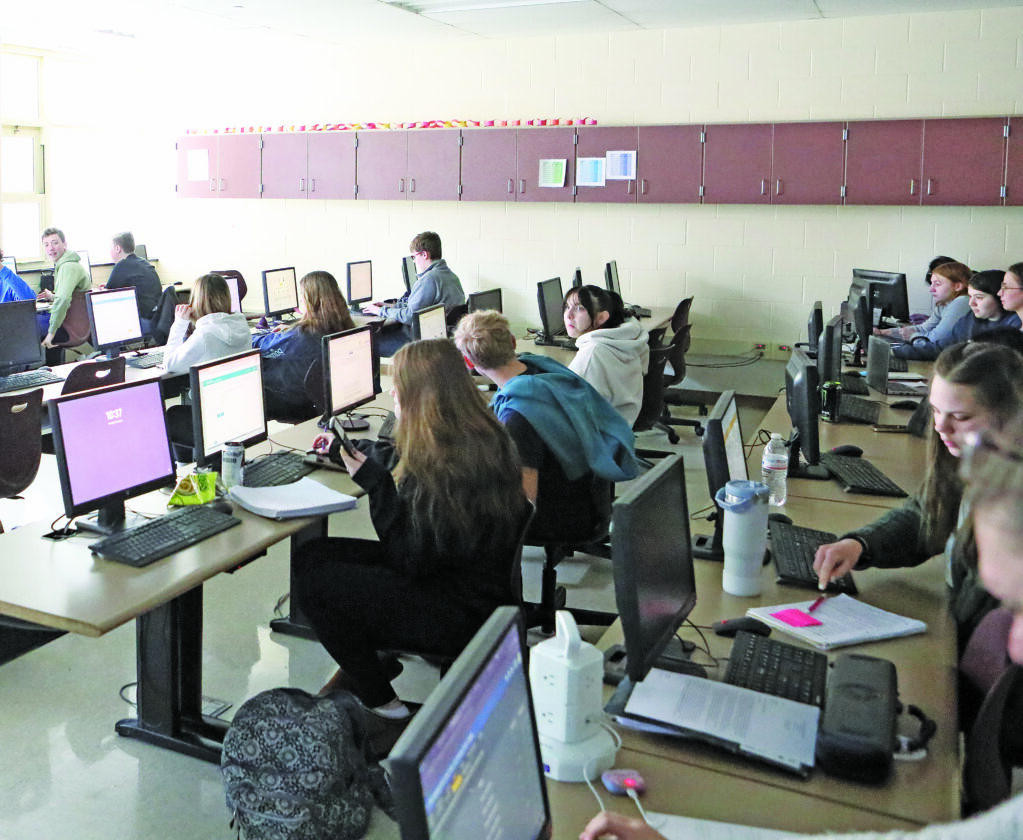
The Alpha Program classes are full of students at Mifflin County High School.
(Editor’s note: This is the last of a five-part series about the Mifflin County School District’s decorated Alpha Program, a district-run cyber education program designed to keep students local, supported and connected.)
-
- The Alpha Program classes are full of students at Mifflin County High School.
LEWISTOWN — When the Alpha Program began more than a decade ago, it was designed to solve a local problem: the rising cost of cyber charter enrollment and the need to keep students connected to Mifflin County’s teachers and community. But as the program has grown, so has its role.
Today, Alpha is not only a districtwide resource — it is part of a regional network of online learning that is reshaping how schools collaborate, innovate, and prepare students for the future.
One of the most significant developments in recent years is Alpha’s participation in Tuscarora Virtual Solutions, a partnership among several districts in the region, including Juniata County, Mount Union, Huntingdon and Southern Huntingdon. Through the partnership, students from different districts work together on Science, Technology, Engineering and Mathematics design challenges, share online learning experiences and gain exposure to peers they might never otherwise meet.
“These opportunities give our students more exposure to the STEM curriculum and allow them to collaborate with students from other nearby school districts,” said Chris Gill, administrator of online programs for MCSD. “It broadens their experience and helps them see themselves as part of a larger learning community.”
The collaboration reflects a shift in how districts think about online learning. Instead of viewing it as a standalone alternative, schools are increasingly using it as a tool to expand access, personalize instruction, and connect students across geographic boundaries. For Mifflin County, Alpha has become a bridge — linking students to courses, teachers, and opportunities that would be difficult to offer within a single building.
This regional approach comes at a time when Pennsylvania is rethinking the role of cyber charter schools. The passage of Act 47 last fall marked the most significant reform to cyber charter oversight in years, tightening accountability and increasing transparency. For districts like Mifflin County, which has invested heavily in its own online programs, the reforms highlight the importance of strong, locally controlled alternatives.
Gill said Alpha’s success is rooted in its intentional design. “We were looking to see how we can do better for students who were interested in online learning,” he said. “Copying what cyber charter schools were doing did not seem to make much sense. We wanted a model that supported students, kept them connected, and gave them the flexibility they needed.”
That philosophy aligns closely with the perspective of Learning Management System educator Suzi Bender, who has spent the last decade working in online learning. She believes the future of education is not about choosing between online and traditional models, but about designing systems that are flexible enough to meet students’ varied needs.
“I feel that the future of education is not solely online or traditional, but simply intentional,” Bender said. “We should not debate the format but rather focus on designing systems that truly meet students’ varied needs. Alpha exists to that end.”
Her experience has reinforced her belief that education cannot be one-size-fits-all. “Each student learns at his or her own pace,” she said. “Online education structures exist and have gained popularity primarily because of that notion.”
Alpha’s hybrid model — blending online coursework with in-person support — is a direct expression of that philosophy. Students can work independently while still receiving help from teachers. They can take courses not offered in the building. They can stay connected to sports, clubs, and friends. They can build schedules that reflect their lives, not the other way around.
For many students, that flexibility is transformative. It allows them to take ownership of their learning, build confidence, and discover new interests. It also gives the district the ability to support students facing health challenges, housing instability, or academic setbacks.
As Alpha continues to grow, its role within the district is expanding as well. It supports summer school, credit recovery, kindergarten through fifth grade online learning, discipline alternatives, and partnerships with outside programs. It is no longer just a cyber option — it is a central part of Mifflin County’s commitment to personalized learning.
And as regional collaboration deepens, Alpha is poised to play an even larger role in shaping the future of online education in central Pennsylvania. The program’s blend of flexibility, structure and human connection offers a model that other districts are watching closely.
In the end, Alpha’s story is not about screens or software. It is about students — their needs, their pace, their potential — and a district willing to build systems that meet them where they are. The next chapter of online learning in Mifflin County will continue to evolve, but its direction is clear: intentional, collaborative and centered on the belief that every student deserves a pathway that fits.
Local News
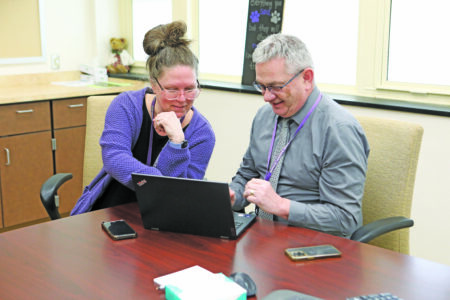
Alpha program expands role as regional online learning hub
Calendar
Reserve Now: •Soup sale — Pick-up 11 a.m. to 12:30 p.m., April 11, Milroy Presbyterian Church, 321 S. Main ...
Mifflin County launches major road safety planning effort with federal grant
LEWISTOWN — The Mifflin County Commissioners took a significant step toward improving roadway safety Thursday ...

Perry County students showcased at Youth Art Day April 11

Bloom benefit
Driver arrested in Milroy DUI stop
Driver arrested in Milroy DUI stop MILROY — Pennsylvania State Police in Lewistown arrested a 22-year-old man ...