
How game warden Conway found his passion teaching secrets of bobcat
-
-
Photo courtesy DCNR
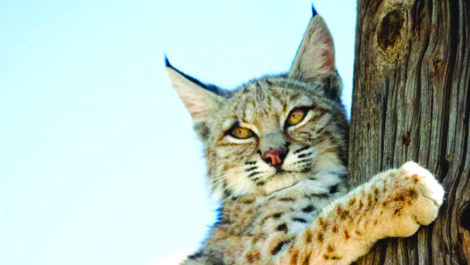
Bobcats were the subject of the Towpath Naturalist Society of Mifflin and Juniata County monthly presentation March 11 in Lewistown.
-
-
Submitted photo
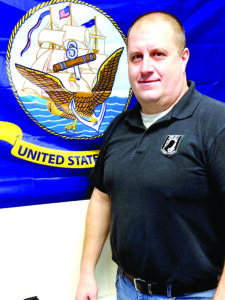
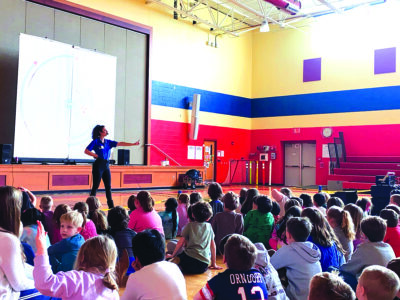
Jimmy Conway was the guest speaker at the Towpath monthly meeting.
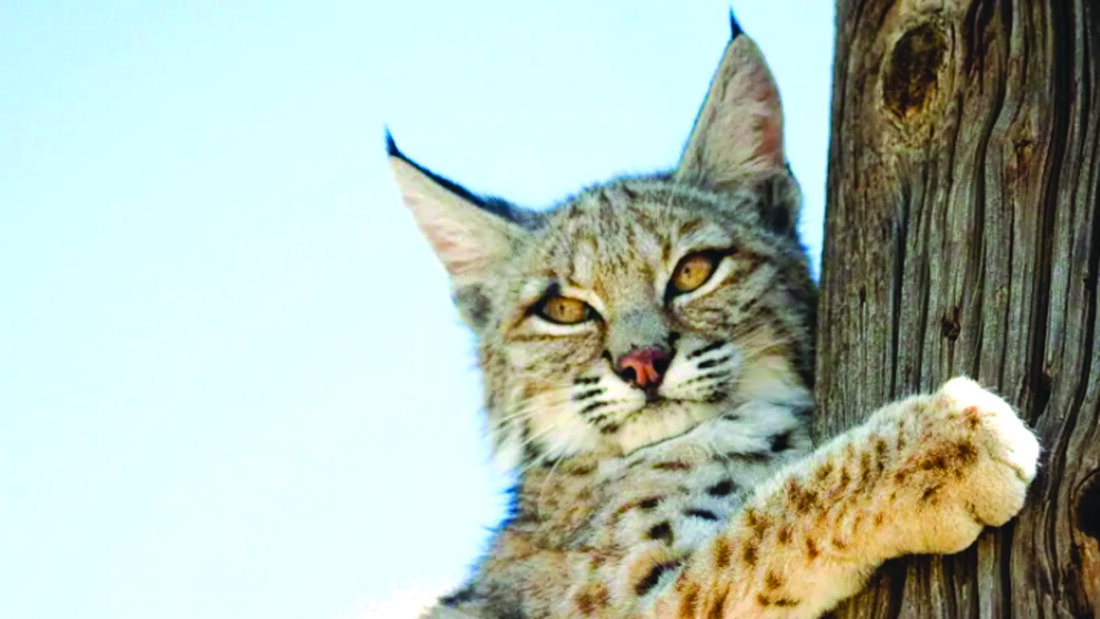
Photo courtesy DCNR
Bobcats were the subject of the Towpath Naturalist Society of Mifflin and Juniata County monthly presentation March 11 in Lewistown.
Editor’s note: This is the first of a two-part series from the Towpath Naturalist Society meeting on March 11 about “Prowler of the Pines,” which featured Jimmy Conway of the Pennsylvania Game Commission.
LEWISTOWN — When Jimmy Conway stepped before the Towpath Naturalist Society of Mifflin and Juniata County on Wednesday, March 11, he didn’t begin with bobcats. He began with the winding path that brought him back home, back to wildlife, and unexpectedly, into a career he never imagined loving.
“I originally came to Mifflin County in 1995,” Conway said, introducing himself with the ease of someone who has stood in front of many classrooms and community groups. “In 2018, I started working for the Game Commission, both part-time and full-time, as a dispatcher and deputy game warden. I did that for a few years. Then I had another opportunity to come around and work with Veteran Affairs, which I was a county director of Veteran Affairs for five years.”
That job, he explained, was meaningful, but something kept pulling him back toward the outdoors. “Then I went back to the state, and then the Game Commission offered me a position doing this,” he said. “The reason why I like this is I’m considering it as my title. It’s the first time they’ve made that position within this region, 1,000-acre region, which covers 13 counties.”
But the real turning point wasn’t the job title or the territory. It was something he discovered only after stepping into the role.
Submitted photo
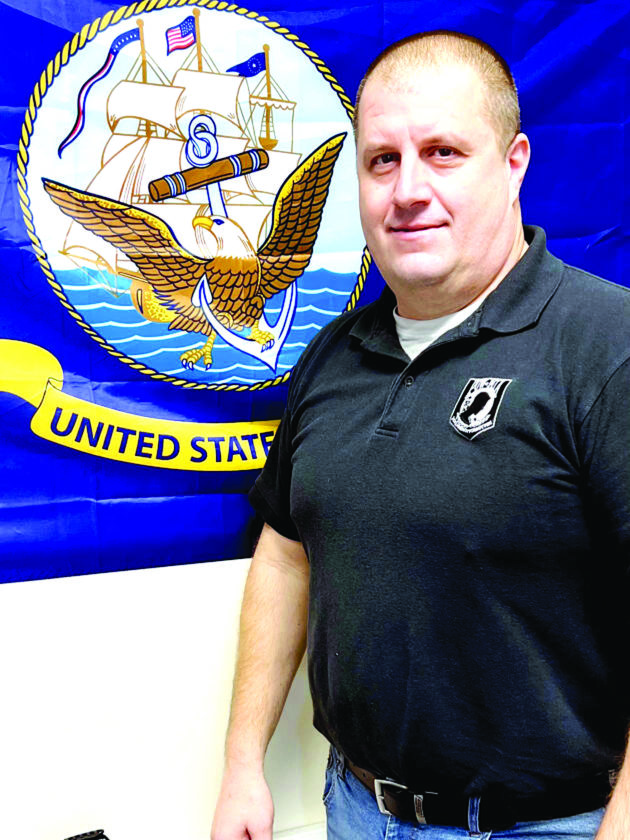
Jimmy Conway was the guest speaker at the Towpath monthly meeting.
“When I did it, I fell in love with teaching. I didn’t know that,” Conway said. “It’s amazing how when you don’t want to do something, you might have a passion for something. So I did that, and I absolutely love teaching.”
That passion was unmistakable as he launched into his program on bobcats, a species he described with a mix of admiration and humor.
“Bobcats are probably one of my favorite animals,” said Conway, the Southcentral environmental education specialist for the Pennsylvania Game Commission. “You don’t see them that often when you’re out and about.”
Bobcats were the subject of the Towpath’s monthly presentation, “Prowler of the Pines,” which was held at the St. John’s Lutheran Church in Lewistown.
Before diving into biology, Conway made one thing clear: he doesn’t pretend to know everything. “I’m not a biologist,” he told the group. “I know enough about you guys to give you some information, but if I don’t know a question you may have, I will give you your information, and I will find the answer for you.”
That honesty set the tone for a presentation that blended science, field experience and storytelling.
He began with the bobcat’s name. “Why do you call it a bobcat? Does anybody know? Yes, because their hind legs are actually taller than their front legs. So when they’re walking, it makes their tail fall back and forth. So pretty, pretty simple. And how it got its name.”
He moved into their solitary nature. “Bobcats are solitary animals,” he said. “They don’t pair up. The males and females will breed, and then the male does his thing and runs off and he leaves the mother to tend to the young ones on her own.”
Conway’s teaching style is rooted in vivid detail. When describing dens, he didn’t just list locations. He painted a picture. “An ideal den for them would probably be this right here,” he said, pointing to a photo of a hollow log.
“They like to get under tree roots. They’ve got good cover. They can hide.”
He shared how quickly mothers react to disturbance. “Within two days, the mother moved her entire den to a new location,” he said. “They’ve got to have a good place to hide. A good place for them to go and raise their young.”
His enthusiasm grew as he described the animals’ physical abilities. “Their eyesight is absolutely incredible,” he said. “They have light-sensing rods in their eyes, which allows them to see objects in a sharper contrast than what we would normally.”
He also admired their temperament. “They just want to go in their happy way and live their happy life,” he said. “They just want to keep hunting and do a good thing.”
Conway’s favorite part of the job is sharing these moments with the public. He recalled a research project where transmitters were implanted in kittens. “The whole procedure took about 13 minutes,” he said. “Kittens were usually responsive within about six minutes.”
He described the tiny transmitters. “It was about an inch long,” he said. “Surgical prep time took about four minutes.”
The study revealed strong survival rates. “Survival rate, about 82%,” Conway said. “That’s a pretty good survival rate for an animal in Pennsylvania.”
But the evening wasn’t just about facts. It was about connection — to wildlife, to community, and to a job Conway never expected to love.
“I love my job,” he told the group. “I want to thank you guys again for having me and being afforded this opportunity to speak to you.”
For Conway, teaching isn’t a task. It’s a calling he discovered by accident, embraced wholeheartedly, and now shares with every room he steps into. And for the audience, his enthusiasm made the elusive bobcat feel a little closer.
Local News
How game warden Conway found his passion teaching secrets of bobcat
Editor’s note: This is the first of a two-part series from the Towpath Naturalist Society meeting on March 11 ...
Juniata County Commissioners approve grant application
MIFFLINTOWN — Juniata County Commissioners approved a grant application that aims to improve justice system ...
Students shine
Lewistown woman jailed on drug delivery charges
LEWISTOWN — A 28-year-old Lewistown woman is in jail after police said she sold cocaine and methamphetamine to ...

Things to do
Calendar
Reserve Now: •Employer workshop seminar — Check-in 8:30 a.m., presentation 9 a.m., Tuesday, March 31, PA ...