Dorcas Buchanan: First female settler in Mifflin County
-
-
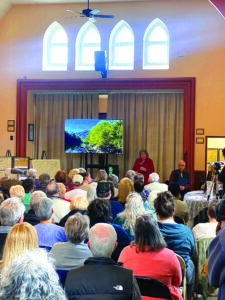
Photo by Juniata River Valley Visitors Bureau
Pictured are attendees of an event at St. Mark’s Episcopal Church in Lewistown detailing the life of Dorcas Buchanan, the first female settler in Mifflin County.
-
-
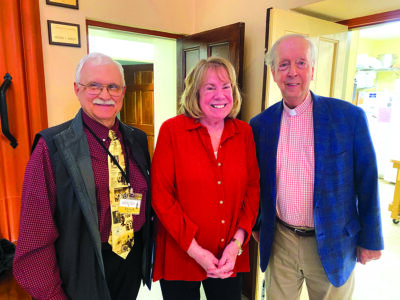
Submitted photo
Pictured are local historian Forest Fisher; Cate Barron, Lewistown native and retired newspaper editor, and Father John Harwood of St. Mark’s Episcopal Church.
-
-
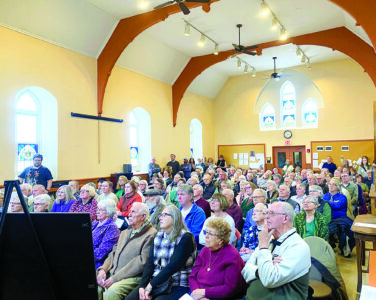
Sentinel photo by SIERRA BOLGER
Pictured are the attendees of an event detailing the life of Dorcas Buchanan, the first female settler in Mifflin County.
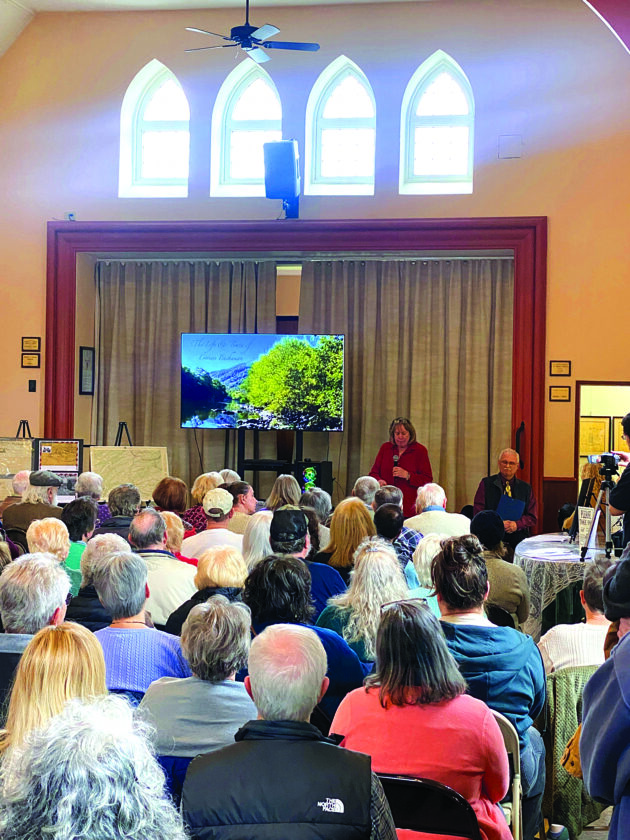
Photo by Juniata River Valley Visitors Bureau
Pictured are attendees of an event at St. Mark’s Episcopal Church in Lewistown detailing the life of Dorcas Buchanan, the first female settler in Mifflin County.
LEWISTOWN — As Pennsylvania celebrates the nation’s 250th birthday, it makes us wonder about our local history.
The Old Town Cemetery — located at the corner of South Brown and Water Streets — remains one of Lewistown’s earliest historic landmarks and resting there is Dorcas Buchanan, a name that should sound familiar to Mifflin County residents.
Born Dorcas Armstrong, she sailed to America as a teenager from Northern Ireland in the early 1700s and is believed to be the first European woman to own property in what is now Mifflin County.
Cate Barron, a Lewistown native and retired newspaper editor, has conducted extensive research into Dorcas Buchanan’s life and shared those findings over the weekend during a presentation at St. Mark’s Episcopal Church.
Born and raised in Lewistown, Barron attended (Dorcas) Buchanan Elementary School and Lewistown High. She returned to the area after college and was news director at WMRF and a reporter at The Sentinel for several years. Barron spent the rest of her career in journalism at PennLive and The Patriot-News in Harrisburg.
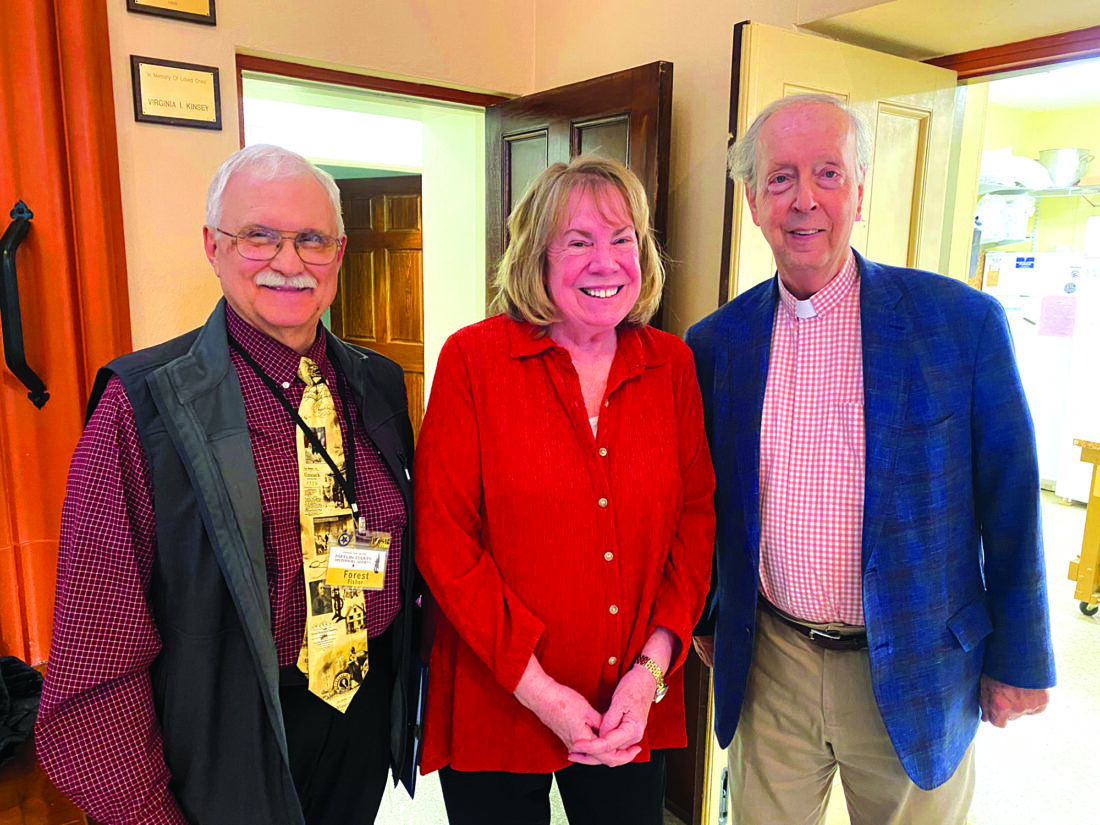
Submitted photo
Pictured are local historian Forest Fisher; Cate Barron, Lewistown native and retired newspaper editor, and Father John Harwood of St. Mark’s Episcopal Church.
“I got interested in Lewistown’s history after retiring in 2024. My sister, Jenny Landis, had worked on the Old Town Cemetery project and suggested researching Dorcas Buchanan”, Barron explains.
According to her research, Dorcas didn’t leave behind a diary or letters but there was a lengthy obit published in The Western Star after her death in 1804. She shows up in a few church and court records.
Barron also found material about her in early histories of Mifflin County and several genealogies. “Her many descendants have shared fascinating legends about her on their Facebook pages as well,” shared Barron.
Now, with her research in tow, Barron shared the story of spunky, high spirited Dorcas, who traveled across treacherous land that no other women had been known to do back then — according to Barron’s findings.
In 1735, about three years after her first husband, Henry Holt, disappeared, Dorcas remarried Arthur Buchanan.
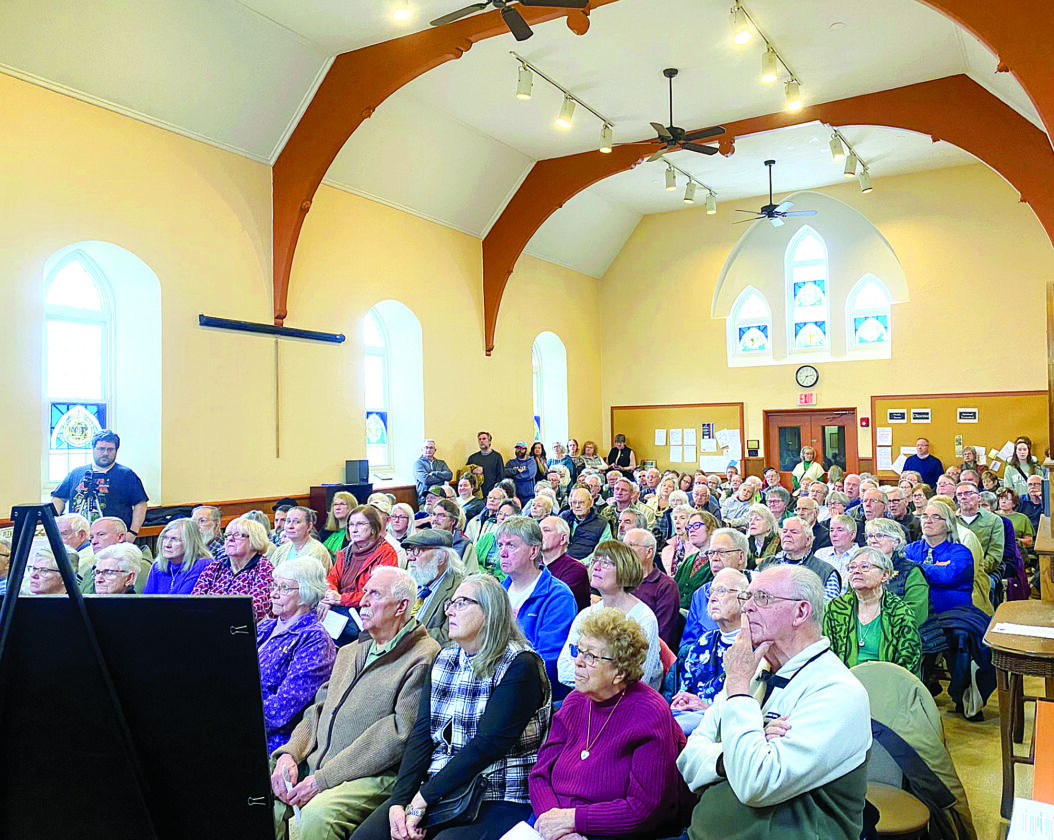
Sentinel photo by SIERRA BOLGER
Pictured are the attendees of an event detailing the life of Dorcas Buchanan, the first female settler in Mifflin County.
“No one knows what happened to Henry, some say soldiers got him, some say he had enough of the frontier life but it was a difficult year for Dorcas not only losing her husband but a baby as well,” said Barron.
She and Arthur went on to have five children of their own, as well as the three children Dorcas had with Henry Holt. Buchanan was a Lancaster merchant and fur trader from Ireland. Alongside his brothers he was among the first of the Susquehanna Valley settlers.
Over the next 16 years, the Buchanans lived in Lancaster and then Carlisle.
In 1751, Arthur received a grant of land in Carlisle and built a two-story log house that served as a tavern on High Street. Barron said there is nothing on the land currently.
In July 1754, Iroquois Confederacy sold most of its land west of the Susquehanna to the colony of Pennsylvania. Arthur saw an opportunity and the Buchanan’s left the Juniata Valley the next month.
According to Barron’s research, Arthur became friendly with Native Americans he traded with, more specifically Chief Kishacoquillas, who lived in the Shawnee Village of Ohesson, which would eventually become Lewistown. It housed about 20 Shawnee families and 60 warriors in 1754.
Barron noted that this area remained in Cumberland County, and that Mifflin County was not carved out until 1789. It took several days of hard, dangerous travel to reach Ohesson from Carlisle.
“One route alone took three days, now known as Fort Granville Road,” said Barron.
When the family arrived at Ohesson, Arthur obtained 200 acres of land by Kish Creek from the Lenape chief known as Captain Jacobs.
“At first, Jacobs did not want to sell the land, but historians believed that Arthur persuaded him with tobacco and rum,” said Barron.
And according to her obituary, the Buchanans left their home five times after the advice from the Shawnee tribe suggesting that it was too dangerous for them to stay.
During one of their escapes, Arthur opened his tavern once again. Carlisle was known as a bustling refugee center during the French and Indian War, making business boom for the Buchanans. However, during the war, they returned to Ohesson, now called Old Town, where they planned to wait out the danger in Fort Granville. But once again, the Shawnee told them it wasn’t safe, saying there weren’t many soldiers to protect them, so they fled to Carlisle.
According to Barron’s findings, that August, French soldiers burnt down the fort in Old Town killing the officer in charge, led by Captain Jacobs. Jacobs was killed one month later.
By the end of 1756, about 3,000 settlers had been killed or captured during that war.
The Buchanans stayed in Carlisle for the duration of the war where Arthur died at the age of 58 in 1760.
In 1762, his land in Old Town was awarded to his widow, making her the first woman to own property in Mifflin County.
Now in her early 50s, she would once again make the trip from Carlisle to Lewistown.
Dorcas was known to be brave and bold, she was chased out of her home many times according to the research.
She managed the store and tavern and had many successful trades, including managing land holdings that she grew from 200 to 300 acres in Lewistown.
She lived to be 92.
Her sons, Arthur Jr. and Thomas Holt, were active in local affairs and Arthur Jr. went on to be a constable in Derry Township.
In 1788, the land went to Arthur Jr. and by 1790 it was subdivided into blocks that make up downtown Lewistown.
“Dorcas is a stunning example of the pioneer spirit it took to settle this country. Her courage and fortitude should be celebrated during America250 and long afterward. What a proud legacy for Lewistown”, said Barron.
Barron said she plans to continue her research and hopes to return to share those findings with the community.
She shared in an interview that she was thrilled to see so many people who were interested in hearing more about Dorcas. “I think the large turnout points to a great demand for hometown history,” said Barron.
Local News
Dorcas Buchanan: First female settler in Mifflin County
LEWISTOWN — As Pennsylvania celebrates the nation’s 250th birthday, it makes us wonder about our local ...
Esports coming to Juniata County schools
MIFFLINTOWN — Competitive gaming, or esports, is officially on its way to Juniata County. During Thursday ...
Commissioners honor Vietnam veterans
LEWISTOWN — It wasn’t the reading of the proclamation that made the moment feel significant — it was the ...
State trooper offers tips to identify scammers
Calendar
Reserve Now: •Employer workshop seminar — Check-in 8:30 a.m., presentation 9 a.m., Tuesday, March 31, PA ...