
Beavertown Museum’s music display honors legendary Davy Jones
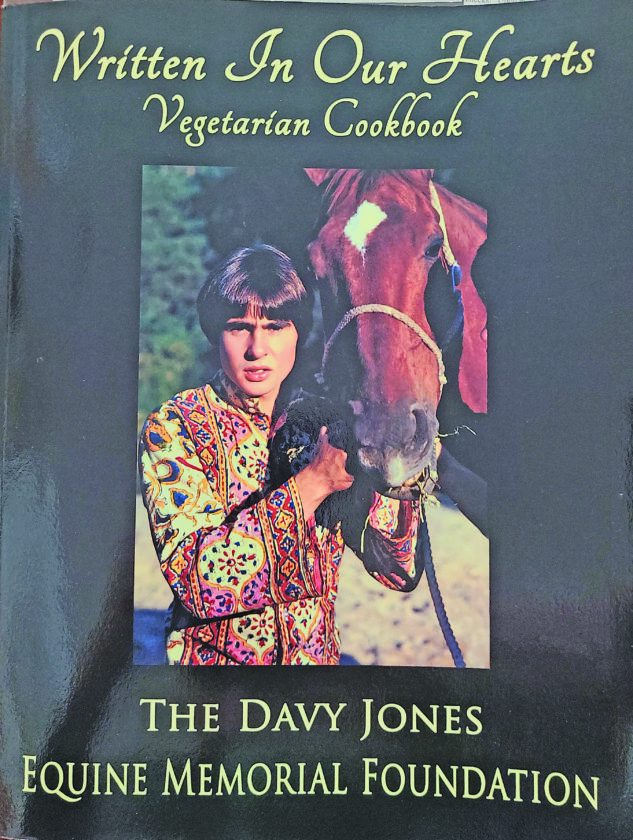
BEAVERTOWN — The Beavertown Historical Society Museum could have chosen any number of musicians for its new music-themed display. Central Pennsylvania has produced its share of singers, small-town bands, and church-choir legends.
But when the museum opens its doors this spring, visitors will find something more unexpected woven into the exhibit: a tribute to a global pop icon who chose this quiet Snyder County borough as his home.
Davy Jones — the British-born star of The Monkees, one of the most recognizable faces of 1960s pop culture — spent nearly two decades living in Beavertown. His connection to the community remains one of the most surprising and cherished chapters in the borough’s history, and the museum’s new display brings that story back into the spotlight.
“Of course, a big part of that is the fact that Davy Jones decided to live in our town. He moved here in 1985, bought a home on South Center Street,” said Thomas Burns, Beavertown Historical Society recording secretary and assistant treasurer.
The museum, located at 111 W. Walnut St. inside the Beavertown Borough Building, will be open from 1 to 3 p.m. on Sunday, March 22; April 12 and 26; May 3 and 17; and on Memorial Day, May 25.
Alongside the display, visitors can pick up “Beavertown’s Snapshots in Time” for a suggested donation of $45.
A star who found a home in Snyder County
Jones first visited the region in the mid-1980s while working with author Alan Green on his autobiography, “They Made a Monkee Out of Me.” What began as a professional trip quickly became something more personal.
After a few visits, Jones fell in love with the quiet pace of Beavertown and bought a home on Center Street called Spruce Lawn, where he raised horses and found the privacy he couldn’t get in larger cities.
“He tried San Francisco for a little while,” recalled longtime friend Bruce Hassinger, who worked at Kline’s Service Center in Beaver Springs, during an interview with reporters after Jones’ death. “But every time he went in there to buy a quart of milk or bread or something he would spend an hour and a half talking about The Monkees. There’s 17 to 18 radio stations, five television stations that everyone wanted him to do all the time, so he needed a place that was less traveled.”
Beavertown became that place — a refuge where Jones could live like a neighbor, not a celebrity. He chatted with locals at the post office, visited friends’ homes and waved from horseback as he rode through town. Neighbors remember him as warm, approachable, and genuinely interested in the people around him.
“He just fell in love with our area, and a nice property became available that had the area for his horses, so he decided to purchase it and become a resident,” Burns added.
A community that mourned deeply
When Jones died suddenly of a heart attack on Feb. 29, 2012, at age 66, the news rippled through Beavertown. Several hundred people gathered in the borough for a memorial service that March — far more than local officials expected.
“It was a real surprise to find out that he had a heart attack and died,” Hassinger said.
He spoke at the service, offering a line that captured both the grief and the affection felt by those who knew Jones: “He died on February 29th, leap year, and now I’m a real bereaver.”
One of Jones’ daughters attended the service, where a clay prototype of a planned statue was unveiled. The hope was to create a permanent memorial near the old Lutheran church Jones owned — a building he once envisioned as a museum of Monkees memorabilia.
But the dream never materialized.
A museum that never came to be
The Lutheran church on Orange Street — the site Jones hoped to transform into a Monkees museum — burned down in 2016, destroying everything inside. Among the items lost was an original Monkees sign used during the band’s final performance, a piece Jones had tracked down specifically for the future museum.
“There were talks of still trying to do a memorial, but nothing ever came to be,” said friend Thomas Rigel during the same interview. “Fizzles out, I think that’s what’s happening. Then after they sold the house in Beavertown, it’s like nowhere to come back to.”
The clay statue prototype, damaged and destined for the trash, was rescued by Rigel.
“The legs were broken, the arms were broken,” he said. “I just started wrapping it in fiberglass material and resin and shored it up a little bit.”
Today, the statue survives — a fragile reminder of a memorial that never fully took shape.
Burns says they had musician Chris Pick play some of Davy’s and the Monkees’ songs. Pick had performed at the memorial events the borough had after Jones’ passing. Pick will be coming back to perform at the exhibit on April 26.
Preserving what remains
Jones’ former home still stands, though painted a different color by its new owners. The church site is empty. The memorabilia he collected is gone. But the memories remain — in the neighbors who remember him knocking on their doors, in the friends who still tell stories about his visits to the service station, and now, in the museum display that honors the musician who chose Beavertown as his home.
Both Hassinger and Rigel say Jones never acted like a celebrity. He didn’t carry himself above anyone. He was simply Davy — the man who laughed easily, who loved horses, who enjoyed the quiet, and who found something grounding in a small Pennsylvania borough.
“Davy’s presence here six months out of a year helped to boost our profile within the state and the country, that he chose our town to become a member of,” Burns said.
A display that brings the story back to life
The Historical Society’s music-themed display includes a variety of musical memorabilia, but Jones’ presence gives it heart. It doesn’t attempt to recreate the lost museum he once imagined. Instead, it acknowledges what Beavertown still has: the stories, the memories, and the pride of knowing that a world-famous musician found comfort and belonging here.
For longtime residents, the display is a chance to remember. For newcomers, it’s a chance to discover a surprising chapter of local history.
And for the Historical Society, it’s another step in preserving the stories that make Beavertown what it is — a place where history is personal, where memories matter, and where even a Monkee once felt at home.
Local News
Calendar
The Sentinel offers nonprofit and other community organizations an opportunity to promote upcoming events for free ...
LUMINA Center continues to shine
Beavertown Museum’s music display honors legendary Davy Jones
police reports
Area man arrested for warrant inside convenience store LEWISTOWN — An off-duty Lewistown Police Department ...
Mayall-Marker earns regional spotlight
‘All About Trout’ brings families into stream life
HUNTINGDON — Morning mist still clings to the ridgeline at Greenwood Furnace in Huntingdon when the first ...