
Finally discovering the road back to ‘me’
How facing fears became the first step toward reclaiming my life

Trending
In 2014, after the birth of my first son, I was diagnosed with severe depression and anxiety. I began therapy but refused medication. At the time, I believed medication would change me or numb my emotions.
It wasn't until much later that I realized mental illness isn't simply a matter of willpower. For many people, including me, brain chemistry plays a role in how emotions are processed. I told myself that being overly sensitive, emotional and constantly overthinking everything was just part of who I was. It wasn't. Much of it was anxiety, and anxiety can be treated.
In 2022, my mental health took a turn for the worse. I had been in a toxic, abusive relationship with the father of my children. I was no longer working, and because I didn't drive, I couldn't go anywhere by myself.
The truth is, though, my struggles didn't begin there.
The people who were supposed to teach me, support me and guide me had failed me long before I met my partner. My sibling and I grew up with two parents battling addiction. Eventually, they separated. We spent time in foster care before my dad gained custody of us. Later, my older siblings moved out, things fell apart, and I eventually went to live with my mom.
We moved constantly. Some places lasted longer than others. Sometimes I had a bed. Other times I slept on a couch.
Because my parents struggled to keep a roof over our heads, they also couldn't afford reliable transportation. If they had a vehicle, no one else was allowed to drive it because they were afraid it would break down -- or so they said.
When I was old enough to work, I did. I walked or relied on rides from family and friends.
But driving was something my anxiety simply wouldn't let me do.
Some days, leaving the house felt like a victory. Large crowds. Talking to strangers. Even everyday situations filled me with anxiety. I tried to find work that allowed me to avoid those things, but strangely enough, I found joy in waitressing. I enjoyed talking with people. Over time, I realized I was likable and that the hurtful things I'd been told about myself throughout my life simply weren't true.
Resilience is the ability to bounce back and adapt to change.
For a long time, I thought resilient people were naturally strong and confident. I never saw myself that way.
My parents, while dealing with addiction and their own unresolved trauma, weren't ready to break the cycle. Unfortunately, they still aren't.
But I was.
Almost three years ago, I reached the lowest point of my life. I stood at my kitchen sink and wanted to die.
I was a full-time stay-at-home mom being told I was worthless, that the world would be better off without me, that I contributed nothing and was a burden because I couldn't drive.
I never imagined I would reach a place where I believed my children would be better off without me.
My therapist didn't know I was having those thoughts, but during one session she shared something that changed my life. She told me one of the most common questions children ask after losing a parent to suicide is, "Why wasn't I good enough for them to stay?"
At that moment, I knew I would never let my boys carry that question.
Even if life felt impossibly hard, I promised myself I would stay and keep fighting.
I started medication. I got a job. Slowly, things began to change. I built friendships, made connections and became a healthier version of myself.
But I still couldn't drive.
A few months later, my spouse of 12 years and I separated. That setback brought new emotional and financial challenges. Before I knew it, two years had passed, and I was a 32-year-old mother with no driver's license, unable to take my sons -- or even myself -- anywhere alone.
In my mind, buying a car to practice in made perfect sense.
So I did.
At first, the car sat in my driveway for days. Eventually, I started taking short trips, mentally mapping every stop sign, every turn and every possible obstacle before I even started the engine.
That's what anxiety looked like for me.
Little by little, my confidence grew.
Those short trips became longer ones. Then they became adventures.
Over the last year, I've driven to places I never imagined I would go. With every trip, I gained confidence. I gained independence. Most importantly, I gained respect for myself.
For many people, driving is simply something you learn as a teenager. You may laugh at a 32-year-old celebrating one year behind the wheel.
But if you've ever lived with anxiety, you understand.
Last July, I bought my car. Just six months ago, I swore I would never drive on the highway. I wasn't ready -- or at least that's what I told myself.
Thankfully, I had supportive people in my life who believed in me until I was able to believe in myself.
Now, hardly a day goes by that I don't drive on the highway.
In June, I took my two sons to the Outer Banks of North Carolina. Just the three of us.
Was it stressful? Absolutely.
Was it scary? Without question.
But making that trip -- and returning home safely with countless memories -- gave me a confidence I never thought possible.
Before that, I'd taken hiking trips, some alone and some with my boys. Our favorite this summer has been Watkins Glen State Park in New York.
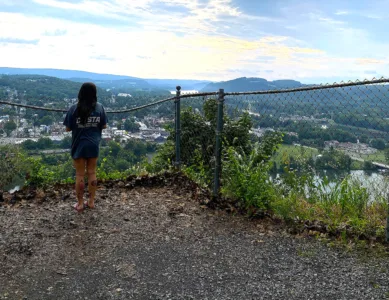
As corny as it sounds, the journey has become more meaningful than the destination.
I've watched breathtaking sunrises over rivers, sunsets across mountains and quiet mornings beside lakes. I've stopped at diners, visited small-town restaurants, met strangers, tried new foods and learned that everyone has a story. Often, people are carrying burdens far heavier than our own.
One morning, while driving home from an adventure, I stopped at a state park overlook to watch the sunrise over the Susquehanna River.
Another vehicle was already parked there, which made me hesitate. Still, I got out and walked toward the overlook.
A woman called out.
"Excuse me. I know this is going to sound weird…"
She paused, and I assumed she was about to ask for directions.
Instead, she said, "I'm an energy healer, and I feel drawn to you. Can I hug you? Please let me hug you."
We embraced.
Honestly, I didn't want to let go.
Her hug felt strangely familiar, like the kind of comfort I'd needed my entire life.
She told me I was going to be OK. She called me beautiful, strong and resilient. She said many other things I can't fully remember because I was overwhelmed in the moment.
We walked away in opposite directions.
I stood looking out over the river and cried harder than I had in a long time.
When I returned to my car, she was still there.
I wanted her to know I didn't think she was strange. In fact, I needed that moment more than she could have known.
We ended up talking and walking together for nearly an hour.
I shared things with her that I'd never told anyone.
She then told me she had survived a murder-suicide attempt after her partner tried to kill them both. Today, she helps others heal.
In many ways, she reminded me of an older version of the woman I once dreamed I could become -- confident, healthy, strong, beautiful and unapologetically herself.
That morning, two women connected through shared experiences of surviving abuse and learning to heal.
Before we parted, we made one promise.
We would never be silenced again.
˘˘
Sierra Bolger is a reporter for The Sentinel.