
Latest results from 2025 Pa. primary
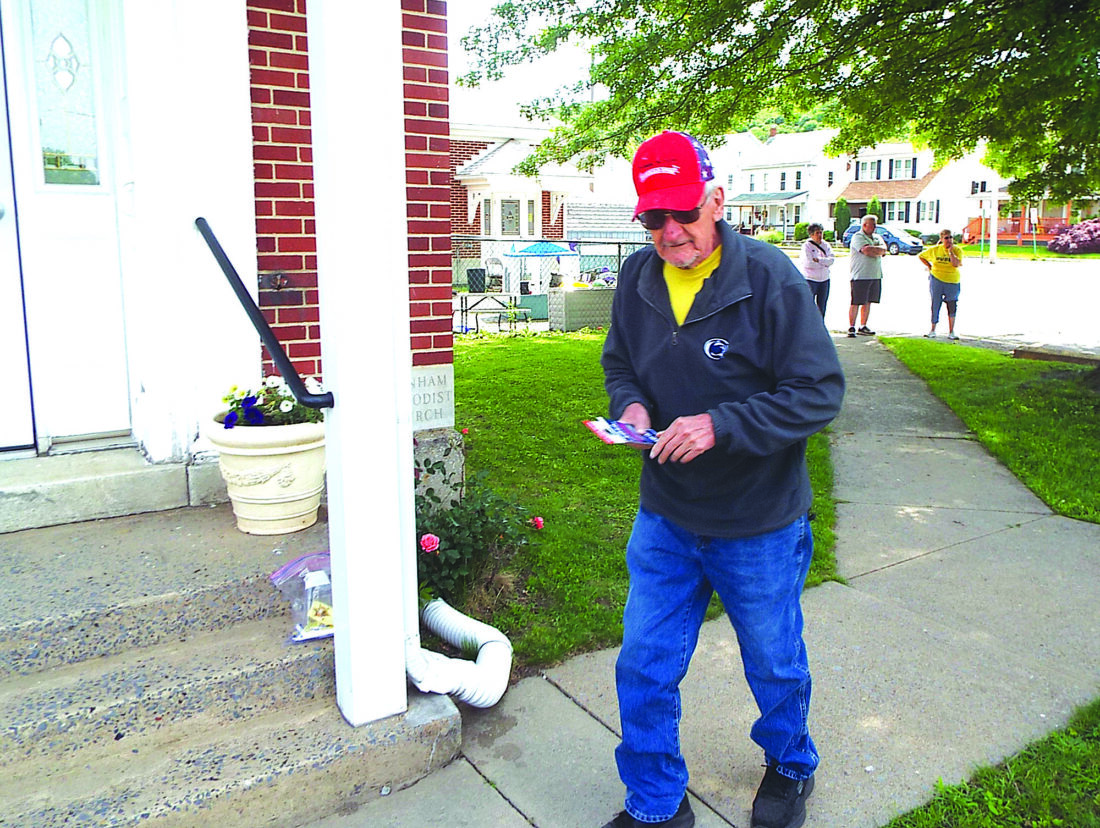
Sentinel photo by TOM LAUB<br> Larry McMaster prepares to vote Tuesday at the Burnham precinct on North Walnut Street, Burnham.
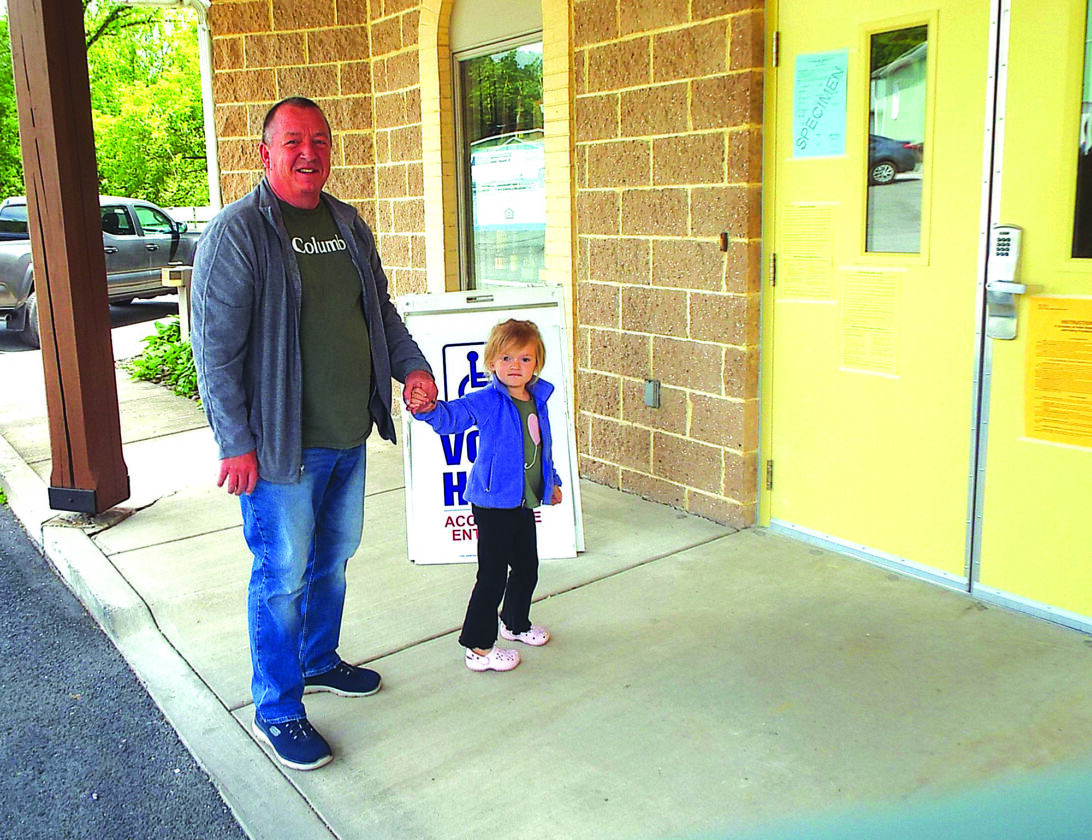
Sentinel photo by TOM LAUB<br> Larry Reck (left) and his granddaughter, Baylee Specht, prepare to cast a ballot at the Derry-West precinct on West Mill Street, Yeagertown.
Sentinel photo by TOM LAUB<br> Larry McMaster prepares to vote Tuesday at the Burnham precinct on North Walnut Street, Burnham.
Sentinel photo by TOM LAUB<br> Larry Reck (left) and his granddaughter, Baylee Specht, prepare to cast a ballot at the Derry-West precinct on West Mill Street, Yeagertown.
Trending
On Tuesday, Pennsylvania Democrats and Republicans elected which judicial and municipal candidates they want to advance to the Nov. 4 general election.
Commonwealth Court
There is one vacancy on Commonwealth Court, one of Pennsylvania's two intermediate appellate courts.
Commonwealth Court presides over civil actions brought by and against the Pennsylvania state government and hears appeals primarily in cases involving state departments and local governments. Superior Court handles criminal, family, and civil cases that are appealed by county Courts of Common Pleas.
The person who wins the open seat on Commonwealth Court could help shape Pennsylvania's laws on everything from elections to firearms, while the candidate who wins a seat on Superior Court could help decide the outcomes of high-profile criminal cases.
The Democratic party has one candidate running, and the Republican party has two.
As of press time, the Associated Press had called Matt Wolford as the Republican candidate for Commonwealth Court with an estimated 62.2 percent of votes
Superior Court
There is one vacancy on Superior Court, one of Pennsylvania's two intermediate appellate courts.
The 15-member Superior Court handles criminal and civil cases that don't involve the government.
As in the Commonwealth Court elections, Democratic primary voters will have just one candidate they can vote for. Republicans will choose between two candidates.
The Superior Court race was too close to call as of press time Tuesday. At about 9:45 p.m., GOP candidate Maria Battista was just ahead of opponent Ann Marie Wheatcraft with 55.2% of the vote . Wheatcraft had 44.8 percent of the vote.
Q: When will we know the final results of the primary election?
A: Votes will be counted throughout the evening on May 20 after polls close at 8 p.m. and released in batches for several hours. By state law, Pennsylvania counties cannot process mail ballots before Election Day, and many have different procedures for counting votes and in what order.
Q: How can I find the latest election results in Pennsylvania?
A: For statewide races, you can check the Department of State's election results website here. Local results may be posted by individual counties on their websites.
Q: Can I track my mail ballot in Pennsylvania?
A: Yes, the Pennsylvania Department of State allows you to track your ballot on its website. Go to pavoterservices.pa.gov/Pages/BallotTracking.aspx, where you will see a prompt to enter your name, date of birth, and county of residence. You can also contact your county election office to confirm the status of your ballot.
Q: What happens if there is a recount?
In Pennsylvania, a recount is automatically triggered when the margin is .5% or less. Election officials must then carry out the recount.
Three or more voters in a voting precinct can also request a recount. Candidates cannot request a recount.
A recount must be completed within three weeks of the election.
Learn more about recounts from The Inquirer.
Q: How does the media get election results?
A: The Pennsylvania Department of State and county election offices make results available to the media.
Q: What is the process for certifying election results in Pennsylvania?
A: According to reporting by Votebeat, the process begins when the polls close and "counties begin uploading in-person results to their websites and that of the Department of State."
A few days later, counties will begin their official canvass of the election.
"The canvass is just going through and double-, triple-checking that you have all of the ballots accounted for," said Derek Muller, a law professor at the University of Iowa who specializes in elections law, in 2022. Election officials are "making sure that everything is included and that every lawfully cast ballot is included in that final tally."
"County elections offices will process provisional ballots during this time, checking to make sure the voters who cast them had not already submitted a mail-in ballot or whether the provisional ballots were somehow otherwise ineligible," Votebeat reported. "Counties will also 'reconcile' their votes, meaning they will check to ensure that the number of voters recorded as having cast ballots in a given precinct matches the number of ballots counted from that precinct."
"County elections offices also perform post-election audits during this period. Counties are required to do a recount of a random sample of 2% of ballots cast or 2,000 ballots, whichever is fewer. Many counties also began conducting risk-limiting audits after the 2020 election, in which a random sample of ballots are hand-counted to ensure the totals match the results from the tabulation machine."
By the Tuesday after Election Day, counties must submit results -- as up-to-date as possible, but still unofficial -- to the Department of State. These figures could change slightly as military and overseas ballots are counted and included in the tallies, per Votebeat.
"Local boards of election, comprised of the county's commissioners, must sign a copy of the results twice for an election to be certified. Typically, candidates raise any challenges to the canvassing process in the five-day window between the first and second signings."