
Hundreds of local volunteer hours make vital hawk watches a reality
Trending
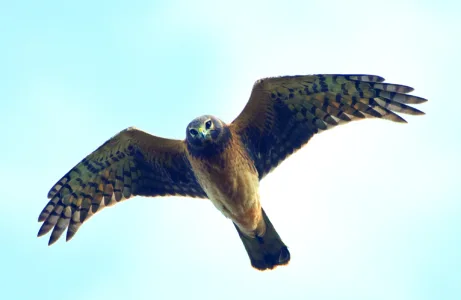
PETERSBURG, Pa. -- On a cool fall morning in central Pennsylvania, Greg Grove can be found scanning the sky for raptors atop the observation deck at the Stone Mountain Hawk Watch on the Huntingdon-Mifflin County line. A retired biochemistry instructor from Penn State, Grove is one of many volunteers whose dedication keeps Pennsylvania's hawk watch network operating.
That work is also part of the legacy of Donald A. Bryant, Ernest C. Pollard Professor Emeritus of Biotechnology and professor emeritus of biochemistry and molecular biology at Penn State. Both Bryant and Grove shared a passion for birding, particularly the raptors at Shaver's Creek Environmental Center and central Pennsylvania hawk watches. Through years of volunteer involvement and observation, they helped support efforts to better understand migratory raptors and the ecosystems they inhabit.
Bryant died in 2024 and bequeathed a $100,000 gift to Penn State Outreach to establish the "Donald A. Bryant Endowment for Raptor Education at the Shaver's Creek Environmental Center." The endowment supports hawk watches and other raptor science and education initiatives and was in addition to other bequests Bryant made to the University totaling more than $2 million dollars. Grove said Bryant never did anything halfway.
"From Stone Mountain and other Pennsylvania watches, Don began a quest to see every one of the hundreds of raptor species on earth," Grove said. "He nearly succeeded, traveling every continent except for Antarctica, where there are none."
Grove continues to put in the hours to ensure hawk watches remain active and the data collected contributes to larger research efforts. While many songbirds migrate each year, Grove said hawks seem to capture the imagination of people a bit more.
"On a good day in the fall, you can see as many hawks in one day as you might see the whole rest of the year in regular birdwatching," he said in a 2023 interview with Penn State Extension. "From roughly early September through November, we are usually here every day from 9 a.m. to 5 p.m. While daily coverage is dependent on volunteers, sitting out here alone and away from everything is pay enough sometimes."
Shaver's Creek Environmental Center, part of Penn State Outreach, participates in hawk watch efforts at three sites in central Pennsylvania, relying on staff and volunteers to conduct seasonal migration counts from September to December and February to April.
Jon Kauffman, education program assistant for Shaver's Creek Environmental Center, said donor support from people like Bryant helps sustain the staffing, volunteer engagement and educational opportunities that make the program possible.
"One of my earliest memories of visiting the Stone Mountain Hawk Watch was with Don. I was an undergraduate at Penn State and began volunteering at Shaver's Creek Environmental Center. At that time, I was a novice to raptor ecology and vividly remember sharing that experience with him," Kauffman said. "He had a large camera at his side and eagerly shared his expertise with me and others on the platform. Over the years, I continued to see his passion for raptors through the State College Bird Club and stories from his travels to birding destinations around the world."
Kauffman said the value of hawk watches extends beyond observation as a hobby.
"Long-term monitoring helps researchers better understand the health of bird populations and ecosystems," Kauffman said. "More than 300 hawk watch sites around the globe collect data on migratory raptors, contributing to collaborative efforts to track population trends and better understand the status of individual species."
The data collected at hawk watches can be compared with information from other citizen science projects, including the Breeding Bird Survey, Winter Raptor Survey, and the longest-running citizen science project, the Christmas Bird Count, helping researchers identify long-term changes in migration patterns and ecosystem health.
Visit the Shaver’s Creek Citizen Science Projects webpage to learn more about hawk watches and the center's citizen science projects.
Gifts to Shaver's Creek Environmental Center advance the University's historic land-grant mission to serve and lead. Through philanthropy, alumni and friends are helping students to join the Penn State family and prepare for lifelong success; driving research, outreach and economic development that grow our shared strength and readiness for the future; and increasing the University's impact for families, patients and communities across the commonwealth and around the world. Learn more by visiting raise.psu.edu.