
Game commission addresses reduced turkey population
Trending
HARRISBURG -- The Pennsylvania Board of Game Commissioners today gave final approval to a measure that simplifies regulations and provides the Game Commission yet another tool to respond to below-goal turkey populations at July's regular quarterly meeting.
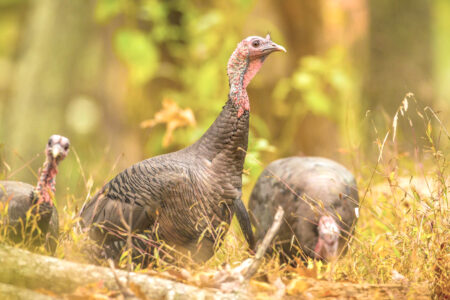
In years past, reducing the length of the fall turkey season was the primary method to increase turkey populations. But last year, the Game Commission eliminated the use of centerfire and rimfire rifles in fall turkey season, noting that relatively few hunters used rifles, but rifles were responsible for about one-third of the fall turkey harvest. That provides an additional means to protect turkey populations without reducing season length.
The measure the board adopted today eliminates the use of other single-projectile firearms -- muzzleloading rifles and handguns, and slug guns -- in the fall turkey season. It's expected to take effect in about six weeks, after publication in the Pennsylvania Bulletin.
Eliminating the use of muzzleloading rifles and handguns, and slug guns in fall turkey season would seem to impact less than 1% of hunters. The change makes for simpler regulations. Once it takes effect, only shotguns and archery gear will be lawful for fall turkey hunting.
"Fall turkey season length in a given wildlife management unit often varies from one year to the next because of adjustments intended to meet turkey population goals," said Commissioner Michael Mitrick, who represents District 6 in southcentral Pennsylvania. "But with this change, one thing is constant: regardless of the season or where you're hunting turkeys, only shotguns and archery gear are allowed. It can't get much simpler."
DMAP change
Lands where hunting rights have been leased and where a fee has been charged for hunting will be eligible to enroll in the Deer Management Assistance Program, commonly known as DMAP.
Leased hunting land no longer is excluded from the program.
That means in 2023, leased lands will be eligible for the program, which enables public and private landowners to better address their own deer-management goals for properties. The application period for landowners runs from April 1 to July 1 each year.
Lands enrolled in DMAP are allotted a number of antlerless deer permits that can be purchased by hunters. Landowners can make the permits available directly from license-issuing agents, or they can choose to issue coupons that then are redeemed for permits. In either case, DMAP permits cost $10.97 each. Hunters can obtain no more than four permits each for properties where coupons are issued, and no more than two permits each for other properties. Each DMAP permit can be used to hunt and harvest an antlerless deer during any established deer season.
Muzzleloader modification
Legal definitions presently prohibit hunters from using muzzleloading firearms that accept breech-loaded, captured-powder charges.
That could change, based on a measure the Pennsylvania Board of Game Commissioners preliminarily approved at the meeting.
As their name suggests, muzzleloading firearms typically are loaded from the muzzle. And present law prohibits any muzzleloaders that accept cartridge ammunition, most of which contain both powder and projectile. Some modern muzzleloaders accept charges that are similar to cartridges, but contain only powder. The captured powder charges are loaded from the breech while the projectiles are loaded from the muzzle. Those muzzleloaders presently are prohibited because of the prohibition on cartridge use in muzzleloaders.
The commissioners said the prohibition on cartridge use in muzzleloaders originally was intended to restrict modern firearms that accept cartridges containing both projectile and powder. Amending the law to allow muzzleloaders that accept captured powder charges would preserve that original intent.
Hunters using captured powder charges in appropriate firearms also might find greater convenience in the ability to more easily unload their muzzleloader without firing it.
The measure will be brought back to the September meeting for a final vote and, if approved at that time, could be in effect beginning in 2023.
Roadkill disposal
Permitted professionals hired by those wishing to address nuisance-wildlife problems now have the authority to pick up and dispose of road-killed deer.
The Pennsylvania Board of Game Commissioners today adopted a measure that allows nuisance wildlife control operators, who already are regulated by the Game Commission, to offer road-killed deer pick-up from roadways and private property.
Previously, the responsibility for picking up and removing deer carcasses from roadways was split between the state Department of Transportation and the Game Commission, which sometimes hires contractors to collect and dispose of deer.
Each year, the Game Commission receives thousands of calls from the public concerning deer carcasses along roadways and on private property. The agency often will assign its wardens to collect and properly dispose of these carcasses as their schedules and work duties permit, which in some cases doesn't meet residents' expectations.
Nuisance wildlife control operators will provide the public an additional resource for road-killed deer removal.
In other actions,
the board:
• took the next step in considering American marten (Martes americana) reintroduction by directing the Game Commission's Bureau of Wildlife Management to develop a plan for reintroduction and management. A native furbearer, the marten once was found commonly in portions of Pennsylvania, but extirpated from the Commonwealth in the early 1900s due to deforestation and unregulated harvest.
A large majority of the public supports marten reintroduction, and it would likely be successful based on the assessment. Reasons for reintroduction cover ecological, political, social, and cultural aspects and this is an appropriate next step in the Game Commission's history of species restoration within the Commonwealth.
• Gave final approval to a measure creating a bobwhite quail recovery area surrounding Letterkenny Army Depot in Greene Township, Franklin County.
The goal of the recovery area is to help quail -- a native species considered extirpated from Pennsylvania since perhaps the 1990s -- and a host of other grassland-dependent species, some of which also are in real trouble.
Field sparrows, eastern towhees, yellow-breasted chats, dickcissels, eastern meadowlarks, cottontails, American woodcock and assorted pollinators all use portions of the same kind of old-field habitat as quail. And most need assistance. Many of those songbird species are, at least, "species of greatest conservation need" here, while others are outright threatened or endangered on a state level.
All told, the wild bobwhite quail recovery area will cover 177.65 square miles.
• Those who hold wildlife capture and transportation permits will need to begin making monthly reports to the Game Commission, based on a measure adopted today by the Pennsylvania Board of Game Commissioners.
The reporting requirement will help ensure wildlife capture and transportation permit holders aren't exceeding the limitations of their permits.
• Preliminarily approved new regulations that would govern shotgun ranges on game lands.
At present, there are only a few ranges designated specifically as shotgun ranges, but with their increasing popularity, more are planned. The regulations approved by the board set forth the types of firearms, ammunition and targets that may be used on shotgun ranges, and would help ensure safety at ranges.
• Directed staff to further explore a handful of new initiatives.
Commissioner Dennis Fredericks, who represents District 2 in southwestern Pennsylvania, directed staff to develop regulatory language that would eliminate the purchase limit for antlerless deer licenses. Fredericks said removing the antlerless license purchase limit would have little effect in most areas but would better accommodate some hunters.
And Commissioner Michael Mitrick, who represents District 6 in southcentral Pennsylvania, asked Game Commission staff to develop regulatory language for a potential ban of the use of urine-based deer attractants. Staff presented information to the board on the risk attractants pose in the spread of Chronic Wasting Disease, which is always fatal to deer and elk.
The Board of Game Commissioners is scheduled to meet next on Sept. 23-24 at the Game Commission's Harrisburg headquarters.