
Trending
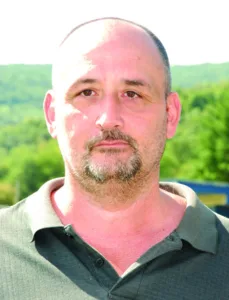
Scot Sechler's birthday came around recently, and I found myself reminiscing again, not about races or records or football games. I thought about the way he treated people.
Scot could make you feel important without making a production of it.
That was his gift.
It didn't matter whether you were the best athlete on the team, the last kid on the bench, a coach, a reporter, or somebody who happened to cross his path. Scot looked at you, listened to you and treated you as though, for those few minutes, there wasn't anybody else he needed to see.
Nearly four years have passed since Scot died at 49 after his battle with cancer. I still miss him. I still think about him. And I still measure coaches and people against the standard he set without ever announcing that he was setting one.
Scot had plenty of athletic credentials. He was a sprinter at Indian Valley, competed at Susquehanna University and Penn State, ran on an All-American relay team at Susquehanna, and won a Middle Atlantic Conference championship in the 100 meters. He later coached boys’ track and football at Lewistown, Indian Valley, and Mifflin County. He spent nine years as Mifflin County's boys track and field head coach and four as the Huskies' head football coach. He also helped Ron Sprecher with the Juniata Valley Striders.
Those are the things that fit nicely into an obituary.
They aren't the things I remember first.
I remember Scot smiling after losses.
Anyone can be available after winning. Winning makes everyone conversational. The real test comes after your team has been beaten, the plan has gone bad, and somebody with a notebook or microphone is waiting to ask you why.
Scot was there.
He would do the interview. He would smile. He would answer the questions. He never made me feel as though I was an inconvenience standing between him and the door.
He came on my Husky Hotline radio show when he was busy enough to have several good excuses not to come. Scot didn't traffic much in excuses. If he told you he would be there, he tried to be there.
That was coaching to him, too.
Track mattered deeply to Scot, but not because a stopwatch could tell him everything he needed to know about a young person. He understood times and techniques. He understood starts, finishes, and the difference a fraction of a second can make.
He also understood that eventually the race ends.
What happens after it mattered more.
Scot wanted athletes to learn the mental side of competition. He wanted them to learn leadership. He wanted them to become good men and women. If a kid could run fast, terrific. If Scot could help that kid become the kind of person who treated others well when nobody was keeping score, he had accomplished something larger.
And he didn't reserve that care for the stars.
The kid winning medals and the kid trying to survive practice were both important to him. Athletic ability might determine where someone finishes in a race. It didn't determine that person's worth in Scot Sechler's eyes.
That sounds simple.
It isn't.
Sports have always been good at sorting people. Starter and reserve. Winner and loser. All-conference and everyone else. Scot knew the difference between evaluating an athlete and valuing a person.
He never confused the two.
Maybe that's why so many people loved him.
Cancer tested all of it. It would have been understandable if Scot had turned inward. Nobody would have blamed him. He was fighting for his life.
Yet the Scot I knew kept caring about everybody else.
My last memory of him comes from May 2022 at the Big Lewie Awards.
I was presenting that night, and I asked the audience to stand and recognize Scot and the fight he was waging. He had recently undergone brain surgery. When the awards were over, Scot came across the room toward where I was sitting.
He was unsteady on his feet.
He came over anyway.
Scot told me he loved me. I told him I loved him, too. We hugged.
That was the last time I saw Scot Sechler.
I've thought about that moment many times since he died. You don't know which conversations will be your last. You don't know which handshake, phone call, interview or hug will have to last for the rest of your life.
I'm grateful ours ended that way.
There are people in sports whose names survive because they won championships, set records, or built monuments to themselves. Scot won races and coached teams, but that isn't the monument he left.
It's in the athletes who learned from him.
It's in the people he encouraged.
It's in his wife, children, family, and friends who knew the man beyond the whistle and stopwatch.
It's in people like me who still miss him.
Scot probably wouldn't enjoy a column like this very much. He would start shifting the credit somewhere else. He would bring up his wife Tamara, his family, his athletes, his assistant coaches, Ron Sprecher, Scott Gantz, or somebody else who helped along the way. By the time Scot finished explaining why everybody else deserved recognition, you might forget the conversation had started with him.
That was Scot.
He spent a lifetime giving other people credit and making other people feel important.
So I'll give him some now.
I've covered a lot of coaches and known a lot of people through sports. Some were great at what they did. Some won a lot. Some knew every technical detail of their sport.
Very few made people feel the way Scot Sechler did.
He was an outstanding coach. He was a devoted husband and father. He was a loyal friend. He was a man who tried to leave young people better than he found them.
I loved him.
I miss him.
And nearly four years later, I'm still thankful that the last thing we got to tell each other was the thing that mattered most.