
Churches challenged to look beyond their own walls
Trending
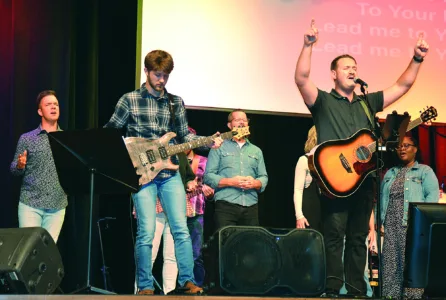
Community worship service draws hundreds
LEWISTOWN -- Local churches should spend less time asking how to attract people to their individual congregations and more time asking what they can accomplish together, an Altoona pastor told hundreds gathered Sunday at Mifflin County High School.
Richard Cox, founding pastor of Overflow Church in Altoona and a leader of the Saturate 814 initiative, delivered the message during a community worship service hosted by Hope Collective, a network of local churches that organizes joint worship and outreach efforts.
The service also featured a 20-member worship team representing churches across Mifflin County.
"What would happen in Mifflin County if churches stopped asking, 'How do we get more people in our churches?'" Cox asked, encouraging those gathered to instead ask what God is doing in the community and how they can become part of it.
Cox pointed to Altoona as an example of what can happen when congregations put aside denominational differences and work toward common goals.
He said that effort began to take shape in 2017, when he and another pastor committed to gathering pastors for prayer on Sunday mornings. Despite doubts that pastors would have time to meet on the busiest morning of their week, seven attended the first gathering, he said.
Cox recalled one pastor acknowledging at that first meeting that his congregation had not worked well with other churches and pledging that would change.
Cox said the gathering helped begin a broader spirit of cooperation that eventually led to communitywide worship gatherings and joint outreach efforts, including programs serving people experiencing homelessness.
The Altoona initiative emphasizes "unity without conformity," Cox said, allowing churches to work together across denominations and traditions while maintaining their individual identities.
"We celebrate what God is doing in other churches without comparison or rivalry," he said.
Participating churches also share their "time, talents and tools" for the benefit of the broader community, Cox said.
Cox tied that cooperative approach to three questions for Christians and church leaders: Do you know Jesus? Is Jesus enough? And will you follow him?
He said those questions should cause congregations to reconsider how they define success.
"Sometimes we're asking God for bigger churches, for more people, for more influence, for more resources, for more ministry success, for more recognition," Cox said.
Cox said the goal was for churches to accomplish together what no congregation could achieve -- or take credit for -- alone.
"What if the only explanation is Jesus?" he asked.
Also during the service, Pastor Steven Small, of Rhodes Memorial United Methodist Church in Burnham, pointed to efforts including local food pantries, pregnancy centers, Keystone Family Alliance, Night to Shine and the Dream Center.
"No one person or one church can care for all the needs that there are," Small said. "As we come together as the church, we work together. We can accomplish things we never do alone."
Small said the Dream Center began with a vision at New Life Church. After prayer and discussion, church leaders concluded that the project should extend beyond one congregation and began partnering with other churches and organizations.
Volunteers and area businesses then helped renovate the building and prepare it for community programs, Small said.
Today, he said, the Dream Center offers community meals and other programs and works with local agencies and the legal system as it seeks to provide faith-based assistance for people dealing with addiction, hunger and financial instability.
Its latest endeavor is a restoration house in Belleville intended to provide housing and support for people leaving incarceration who may struggle to find housing because of their criminal histories.
"The community is better when we work together," Small said.