
A slow-motion schism
Trending
United Methodists have for generations been a mainstay of the American religious landscape -- one of the most geographically widespread of the major Protestant denominations, their steeples visible on urban streets, in county seats and along country roads, their ethos marked by a firm yet quiet faith, simple worship and earnest social service.
But the United Methodist Church is also the latest of several mainline Protestant denominations in America to begin fracturing, just as Episcopal, Lutheran and Presbyterian denominations lost significant minorities of churches and members this century amid debates over sexuality and theology.
In annual regional gatherings across the U.S. earlier this year, United Methodists approved requests of about 300 congregations to quit the denomination, according to United Methodist News Service. Special meetings in the second half of the year are expected to vote on as many as 1,000 more, according to the conservative advocacy group Wesleyan Covenant Association.
Scores of churches in Georgia, and hundreds in Texas, are considering disaffiliation. Some aren't waiting for permission to leave: More than 100 congregations in Florida and North Carolina have filed or threatened lawsuits to break out.
Those departing are still a fraction of the estimated 30,000 congregations in the United States alone, with nearly 13,000 more abroad, according to recent UMC statistics.
But large United Methodist congregations are moving to the exits, including some of the largest in Arkansas, Georgia, Louisiana, Oklahoma and Texas.
The flashpoints are the denomination's bans on same-sex marriages and ordaining openly LGBTQ clergy -- though many see these as symptoms for deeper differences in views on justice, theology and scriptural authority. The denomination has repeatedly upheld these bans at legislative General Conferences, but some U.S. churches and clergy have defied them.
This spring, conservatives launched a new Global Methodist Church, where they are determined both to maintain and to enforce such bans.
A proposal to amicably divide the denomination and its assets, unveiled in early 2020, has lost its once-broad support after years of pandemic-related delays to the legislative General Conference, whose vote was needed to ratify it.
Now the breakup and the negotiations are happening piecemeal -- one regional conference at a time.
New York Bishop Thomas Bickerton, president of the Council of Bishops, issued a statement in August denouncing "a constant barrage of negative rhetoric that is filled with falsehood and inaccuracies" by breakaway groups. In particular, he disputed allegations that the church is changing core doctrines.
But he said the denomination seeks to find a balance between encouraging churches to stay yet enabling them to go.
"It's a both/and," Bickerton said in an interview. "We want people to know straight up front that we don't want them to leave. We need traditionalists, we need centrists, we need progressives willing to engage in a healthy debate to discern what God's will is."
But more departures are expected next year.
In just the Western Pennsylvania Annual Conference, about 300 of its 800 churches have begun inquiring about the process of leaving by the end of 2023, according to the Wesleyan Covenant Association. Not all may follow through, but some see it as inevitable.
"We feel like to stay the same in our mission and theology, we need to change denominations," said the Rev. Steve Cordle, lead pastor of Crossroads Church. Based in Oakdale, Pennsylvania, it's one of the largest congregations in the conference. It's considering going independent or joining the Global Methodist Church.
A few miles away in Bethel Park, another Pittsburgh suburb, Christ United Methodist Church remains committed to the denomination.
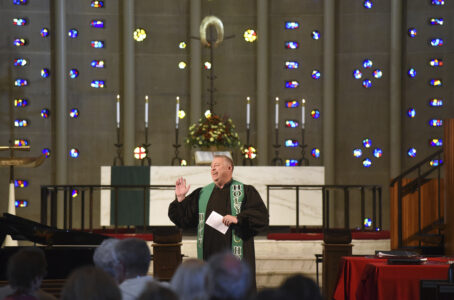
The Rev. Chris Morgan said his church has a "big tent" of liberals and conservatives with most congregants "leaning in toward the center." The church recently hosted an educational series on hot topics including the schism, guns, abortion and COVID-19.
"Instead of becoming like society, we're trying to become an example of what it looks like to disagree and still treat people with respect and care and love," Morgan said.