
Thunderstorms cleared wildfire smoke from Northeast ahead of World Cup final, meteorologists said
Trending
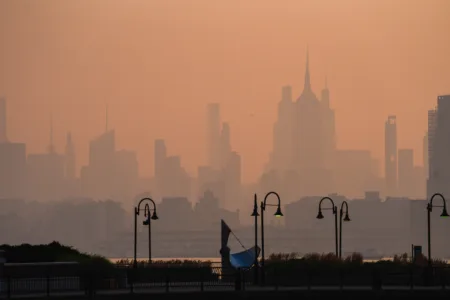
EAST RUTHERFORD, N.J. (AP) -- Meteorologists said smoke from Canadian wildfires that had engulfed the Northeast in haze was expected to mostly clear from the New Jersey region in time for Sunday's World Cup final, thanks to thunderstorms that moved through the area.
Warnings for unhealthy air quality remained in effect Saturday across a wide stretch of the United States. At MetLife Stadium, where the final was set to take place, heavy rain fell and thunder boomed, prompting state police to urge spectators to leave the seating bowl and field and take shelter. The sky stayed the same thick, soupy gray it had been for days.
The storm front, forecasters said, would largely move the smoke out of the Northeast before the match between Spain and Argentina.
Smoke from the wildfires had continued to drift across the U.S., and President Donald Trump kept blaming Canada for the cross-border haze. Trump, who planned to attend the final, threatened tariffs in response, a move Ontario Premier Doug Ford criticized as unacceptable and shortsighted.
At the stadium, even after a drenching thunderstorm and flash-flood warnings forced Spain to suspend its final outdoor training session, the haze lingered. Once the rain passed, Netherlands tourist Joost Timpers and his two sons were among fans taking photos outside the venue, renamed the New York/New Jersey Stadium for the tournament. They had biked more than an hour from their hotel just to see it.
"We're not experts in air quality," Timpers said, adding that he hadn't noticed a difference from cycling back home.
Meteorologists said the storms would help clear the air. Tyler Roys of AccuWeather said the thickest smoke -- the kind that had produced the worst air quality -- was not expected to remain over New York City or much of the Northeast. WFLA-TV meteorologist Jeff Berardelli said the front would "sweep the atmosphere clean," leaving only faint smoke spectators might still smell.
Air quality readings at the stadium, measured every 10 minutes, had swung between unhealthy and very unhealthy in the two days prior, said David Lu of Clarity Movement, which provides monitoring services. He said readings were expected to improve within hours because of the rain.
Forecasts called for temperatures around 80 degrees, light breezes and low humidity for kickoff -- "much better weather for the World Cup," Berardelli said.
Meteorologists expected heavier smoke Sunday to remain closer to the fires, over parts of the Midwest and Great Lakes.
Trump, meanwhile, continued to criticize Canada, saying the U.S. was being "invaded" by polluted air. Canadian Prime Minister Mark Carney responded that climate change was everyone's responsibility, including the United States. Ford noted Canada had helped the U.S. during past disasters, saying "that's what neighbors do."
Hundreds of fires were burning across Canada and northern Minnesota. Meteorologists said they were burning longer and faster because of climate change. Environment Canada issued air quality warnings nationwide. Fires prompted evacuations in Nova Scotia and northwestern Ontario, where some of the most intense blazes were burning. Nearly 200 wildfires in Ontario had already scorched more land than all of last year's fires. In Thunder Bay, Fire Chief Dave Tarini said the season was unprecedented in his 35 years on the job.
In British Columbia, about 100 fires were burning, up sharply from 20 earlier in the week. Officials said roughly 4,000 lightning strikes Friday had ignited many of them.