
Through my Pap’s eyes: When the guns began to fire
Trending
Submitted photos
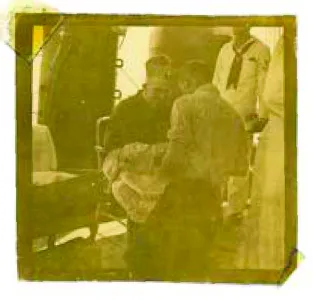
James W. Heller Sr. receives a blessing from Archbishop Piani aboard the USS Eldorado on Aug. 12, 1945. Heller served aboard the Navy command ship during World War II, including the campaigns at Iwo Jima and Okinawa.
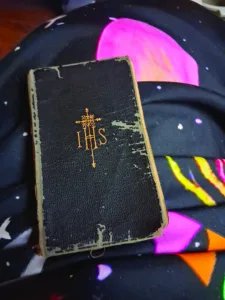
The pocket Bible that James W. Heller Sr. carried during his World War II service aboard the USS Eldorado. The worn cover reflects the book’s age. The Bible remains among the personal belongings preserved by the Heller family.
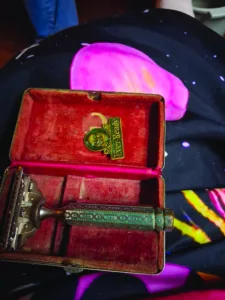
James W. Heller Sr.’s shaving razor rests in its original Ever-Ready case. Heller carried the shaving kit aboard the USS Eldorado during World War II. The family retained it as a reminder of his Navy service.
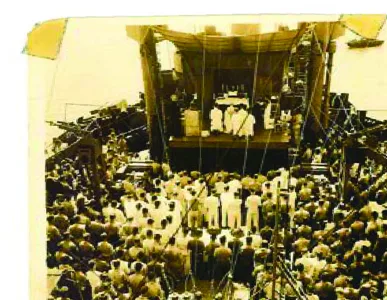
Sailors gather for a Mass celebrated by Archbishop Piani aboard the USS Eldorado on Aug. 12, 1945. The ship served as a command and communications center during major operations in the Pacific.
The series follows his granddaughter's discovery of the letters, Heller's Navy training and service aboard the USS Eldorado and what his son learned about his father through the letters.
LEWISTOWN - One drawing showed two sailors talking beside a table. In the next, gunfire sent them ducking beneath it.
James W. Heller Sr. recognized himself in the drawings. In a letter written during the fighting at Iwo Jima, he described the drawings to his wife, Margaret, whom he called Peg, and admitted something he hadn’t expected to learn about himself.
“Don’t let anyone say that one doesn’t get scared for I know better and only too well,” he wrote.
Heller, a Mifflin County father of three, had been learning Navy communications and radar operations less than a year earlier. Now, he was serving aboard the flagship of Vice Adm. Richmond K. Turner, who directed amphibious operations from a ship close to the fighting. His granddaughter, Christina Short, later transcribed the letters. They reveal what Heller could say during the fighting and what he finally told his family after the war ended.
Off Iwo Jima
The Eldorado reached Iwo Jima for the Feb. 19 invasion and remained offshore until Mar. 9, according to the Navy’s ship history. Turner, Marine Lt. Gen. Holland M. Smith and Navy Secretary James Forrestal were among the prominent figures aboard during the operation. The Eldorado served as a floating headquarters and communications center, coordinating operations as Marines fought ashore.
Before the landings, the ship had offered its own diversions. In a Feb. 14 letter, Heller described a Mardi Gras celebration with costumes, music and sailors pretending to be royalty. The festivities had broken the routine. He hoped the coming days would go well, particularly against the enemy.
On Feb. 15, Heller reported that officers and enlisted men in the ship’s C.S.C. room had received praise for their work. He also warned Margaret that he might be unable to write for a while.
Eight days later, on Feb. 23, Marines raised the American flag on Mount Suribachi. Heller didn’t mention the flag raising in his Feb. 23 letter. Instead, he borrowed paper to send a few words home before mail left the ship.
“Things around here are moving along fairly well,” he wrote. “Can’t say much about it.”
In another letter, he sent the drawings, admitted his fear and described a man hearing gunfire and ducking unconsciously. Heller said he would rather be almost anywhere else. Yet amid the fighting, he asked about broken eyeglasses at home and worried over household finances.
In a Mar. 1 letter, Heller described a new assignment he called “Dead Reckoner,” tracking night-fighter planes so their directors could locate them.
“I guess I better not say how this is done,” he wrote.
He said the men had spent about two weeks working four hours on duty and four hours off, leaving them an average of roughly 90 minutes of sleep each night.
In early March, he prepared a package for his children. It contained clothes, pennies, campaign ribbons and two small flashlights, one for Mike, the other for Joe. He explained the batteries and warned that the smaller light couldn’t be repaired once its battery failed.
The nights off Okinawa
The Eldorado sailed on to another invasion. On Apr. 1, 1945, it took position off Okinawa for the opening landings, this time carrying Lt. Gen. Simon Bolivar Buckner, commander of the 10th Army. The danger from Japanese aircraft would shape the ship’s work for weeks.
The Navy’s history describes the Eldorado’s combat information center as a central part of the fleet’s defense against daytime and nighttime air raids. Radar operators tracked approaching aircraft, while fighter directors coordinated American planes defending the fleet. Heller worked in this communications operation, although his letters don’t establish his role in individual interceptions.
On Apr. 7, Heller wrote that the previous night had been busier than any yet. The alarms could come without warning.
“General Quarters happens any time now,” he told Peg.
A letter to daughter Jane the following day asked whether she was riding her bicycle safely and whether anyone had greased its wheels. He reminded her to attend church, look after her brothers and be careful on the highway. Then, almost in passing, he mentioned that a great deal had happened where he was.
On Apr. 10, sitting on his bunk, Heller tried to find something he could write without giving away information the Navy wanted kept secret.
“News-Yes, plenty, but I’m afraid it wouldn’t get very far, so give that up.”
The press and radio, he thought, might tell Peg more about what was happening around him than he was permitted to say himself. Threats could arrive from anywhere. He could at least report that her letters were reaching him, a comfort some shipmates did not have.
Then came word that President Franklin Roosevelt had died. In his Apr. 14 letter, Heller wondered what the death would mean for the war, but trusted the president’s preparations and the men carrying them out. The following day, the ship held a memorial service.
Things had been quiet for 24 hours, he wrote, though he didn’t expect the quiet to last. He went on to describe a Sunday dinner of creamed chicken, potatoes, asparagus, iced tea and cake. He’d bought $3 worth of stamps because he was writing so often.
On Apr. 29, Heller described another frightening night as Japanese kamikazes attacked the American fleet. The planes kept coming throughout the night, leaving the sailors little relief from the threat.
“Too many anxious times last night to suit me,” he wrote.
Four more weeks
By May, Heller was unsure whether he’d see home that year. During a spell of bad weather that limited activity, he asked Peg about his golf clubs and wondered whether Joe was parading around the house in his father’s hat.
On May 18, the Eldorado left Okinawa. Heller did not go with it.
After Japan’s surrender, Heller could finally tell Margaret what happened when the Eldorado departed Okinawa without him. In a Sept. 5 letter, he said he’d expected to leave aboard his ship, but higher authorities wanted him to remain because they valued his work. He stayed in the danger area for roughly another four weeks.
“Four weeks of misery for me,” he wrote.
Plans had faltered, and he spent nights hearing warnings of approaching suicide aircraft. He later moved among ships and stations before returning to the Eldorado. His account carries the frustration of a man who’d expected to be safely away, only to watch his ship depart without him.
In a Sept. 10, 1945, letter, Heller recalled sitting so close to Vice Adm. Alfred M. Pride during general quarters that they sometimes kicked each other in the shins. Neither had room to move far; there was work to be done.
Three days later, on Sept. 13, Heller wrote from Manila about something he had rarely discussed during the fighting: his fear that he might never see his family again. When the guns aboard ship went off, he thought of Peg and the children.
“I, too, often wondered what would happen if I didn’t return,” he wrote.
He had also learned to regard a moonlit night differently. In a Sept. 21 PostScript, he wrote that an evening under a full moon was the first he could remember enjoying at sea. During the attacks, he recalled, Japanese planes had appeared about half an hour after moonrise.
In his earlier Sept. 13 letter, he had described how he managed to think about home while doing his job:
“Between the information I was getting and giving out, I always found time somehow to think of you.”