
Kauffman to present ‘Mammals of Central Pennsylvania’ on Oct. 13
Trending
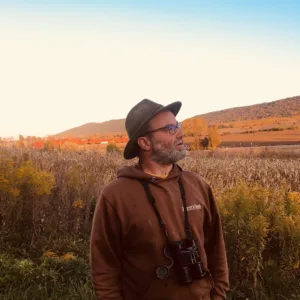
LEWISTOWN -- For Jon Kauffman, the ridges and valleys of central Pennsylvania have always been more than scenery. They are memory, family and the place where he first learned to pay attention.
Long before he became assistant program director at Shaver's Creek Environmental Center in northern Huntingdon County, he was a boy riding up Stone Mountain in his grandfather's Jeep CJ, climbing a narrow road toward a hunting camp that had hosted generations.
Through breaks in the trees, he would look down at Big Valley, watching the everyday life of the community as tiny specks far below.
At the time, Kauffman didn't know that hundreds of migrating birds passed over that same landscape each fall and spring. He didn't know that the ridges he walked as a child were part of a major flyway for Golden Eagles. He didn't imagine that one day he would return to Stone Mountain not as a hunter, but as a hawk watcher.
Kauffman will bring that lifelong connection to the outdoors to Lewistown on Tuesday, Oct. 13, when he presents "Mammals of Central Pennsylvania," to the Towpath Naturalist Society of Mifflin and Juniata County at 7 p.m. at St. John’s Lutheran Church, 120 N. Main St., Lewistown. Visitors and new members are always welcome.
The program will explore the species that define the region's forests, fields, and waterways, offering a look at the animals that share the same ridges and valleys that shaped his childhood.
Kauffman promotes conservation through citizen science projects such as Project Nestwatch, Monarch Watch, Winter Raptor Surveys and seasonal hawk watches. Each spring, he partners with the State College Bird Club to help coordinate the Tussey Mountain Hawk Watch, one of the most important Golden Eagle migration sites in the East. His work has taken him to Cape May Bird Observatory and the Intermountain Bird Observatory in Idaho, but his roots remain in the Juniata Valley.
While majoring in wildlife and fisheries science at Penn State, Kauffman discovered the volunteer opportunities at Shaver's Creek. He became a work‑study student and raptor center intern, assisting with public programs and learning the ways of hawks, falcons, eagles and vultures. He said those early experiences shaped his understanding of how people connect to the natural world.
"In my current role at Shaver's Creek, I find myself building relationships with those around me and the natural world through projects that invite an understanding of the interrelationships around us," he said.
Whether it is "stump sitting" at a hawk watch or meeting a landowner who provided a fence post for an American Kestrel nestbox, he said Shaver's Creek has helped people feel a sense of belonging to the flora and fauna around them.
That sense of belonging is central to his work. Kauffman has a passion for canoeing the Juniata River, exploring new habitats, studying native plants, and helping people discover the avian world. He said he has witnessed how simple encounters with wildlife can change the way people see their place in the landscape.
Years after those childhood trips up Stone Mountain, Kauffman returned to the ridge as a volunteer hawk watcher. He found himself eager to learn from the seasoned observers who had spent decades studying migration. He remembers asking questions like "How did you know that was a Red‑shouldered Hawk?" and listening as volunteers explained the subtleties of flight, shape, and behavior.
Each fall and spring, volunteers spend countless hours on scenic vistas watching raptors migrate south through the region. Starting in early September, visitors can join them at multiple locations to observe migration at its finest. Kauffman said those hours on the ridge are more than data collection. They are moments of connection, reflection, and shared purpose.
His Oct. 13 program will shift that focus from the sky to the ground, exploring the mammals that inhabit central Pennsylvania's diverse ecosystems. From black bears and bobcats to river otters and flying squirrels, the region's mammals play a vital role in shaping the health of forests and waterways. Kauffman will discuss their behaviors, habitats, and the conservation challenges they face.
He said understanding mammals is part of understanding the larger story of the landscape -- a story that includes migration, habitat change, and the relationships between people and wildlife. His goal is to help people see the natural world not as something separate, but as something they are part of.
Kauffman's work at Shaver's Creek reflects that philosophy. As assistant program director, he helps coordinate citizen science projects, public programs and partnerships that connect people to the outdoors. He said the center has provided opportunities for volunteers, students, and community members to learn, explore, and contribute to conservation.
Whether he is coordinating a hawk watch, leading a program, or canoeing the Juniata River, Kauffman said he is guided by the same sense of wonder he felt as a child on Stone Mountain. The landscape that shaped him continues to inspire his work, and he hopes to share that inspiration with others.