
Reaching new heights
Beaver Stadium\\\'s transformation takes center stage
Trending
UNIVERSITY PARK -- When Penn State fans return to Beaver Stadium this fall, they’ll enter a venue that looks familiar in all the right ways and dramatically different in others.
For generations, Beaver Stadium has stood as the heart of Penn State football, a massive steel landmark that rises from the center of Happy Valley and comes alive each fall Saturday. Now, after years of planning and months of visible construction, the iconic venue is taking on a new identity through a $700 million revitalization project that is reshaping the game-day experience while preserving the traditions that made the stadium famous.
The most obvious changes can be seen from miles away.
Towering above the west side of the stadium is the new West Tower, a structure that has quickly become the defining feature of the renovation. Its massive footprint has transformed the stadium skyline and created a new focal point on a campus where Beaver Stadium has long served as one of the most recognizable landmarks.
“The footprint is massive,” Penn State Athletic Director Pat Kraft said as construction began. “It is a big, big, big, big building.”
The Nittany Lions kickoff the 2026 season against Marshall today in a 3:30 p.m. start.
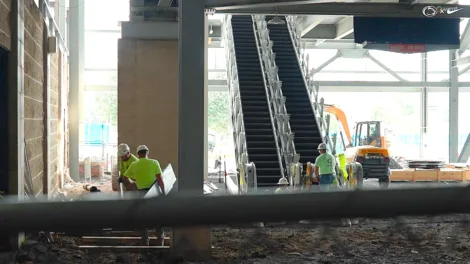
Recently, first-year Penn State football coach Matt Campbell got an up-close look at the progress during a hard-hat tour of the construction site. Accompanied by project leaders and university officials, Campbell toured the developing west side and received updates on what fans can expect when the Nittany Lions take the field in 2026.
The news was encouraging.
According to project officials, the structural work on the West Tower remains on schedule and is expected to be completed before the start of the 2026 football season. While the interior construction of the premium clubs, suites and Welcome Center will continue beyond that point, the building itself will be fully erected and visible for fans arriving on game day.
For those who have watched the construction unfold over the past two years, the scale is remarkable. What once housed Beaver Stadium’s aging press box has been replaced by a modern structure that extends higher than anything previously seen on the west side.
And the seating won’t be far behind.
During the tour, Michael Abbondante, senior project manager for Barton Malow, told Campbell that the new west-side bleacher seating will also be completed in time for the 2026 season. Those seats promise to provide a perspective unlike any other in the stadium.
In fact, the upper reaches of the new seating sections will sit higher than the former press box that stood for decades above the west stands before being demolished in early 2025. Fans sitting near the top will enjoy sweeping views not only of the field below but also of the ridges and valleys surrounding Happy Valley.
The dramatic elevation changes have effectively created a new skyline inside Beaver Stadium. Spectators occupying the highest rows will look down on seating areas that were once considered some of the tallest in college football, including the towering sections in the north and south end zones.
Yet the project is about much more than creating impressive views.
Penn State officials have repeatedly emphasized that the renovation is focused on improving the overall fan experience. For years, Beaver Stadium’s enormous crowds often meant crowded concourses, long restroom lines and limited premium seating options. The revitalization project addresses those concerns through wider walkways, upgraded facilities and expanded hospitality spaces designed to accommodate modern expectations.
The addition of club areas and suites brings new amenities to a venue already known for its unmatched atmosphere. At the same time, upgrades to common areas will benefit every fan who walks through the gates.
The challenge has been striking a balance between modernization and tradition. Beaver Stadium is more than a football venue. It is a gathering place that carries decades of memories, from White Outs and championship celebrations to generations of families sharing Saturdays together. University leaders have consistently stressed that the goal is not to replace that identity but to strengthen it for future generations.
Campbell’s visit offered a reminder that the transformation extends beyond steel, concrete and construction schedules. Before his tour began, he addressed the workers helping bring the project to life and thanked them for their contributions.
“It is my honor to represent this, and I can promise all of you, all this hard work you’re putting in to make this really special, we’re going to put that same work behind the scenes to make the product on the field really special,” Campbell told the group. “We’ll look forward to making you proud this fall.”
His comments connected two major efforts taking place simultaneously in Happy Valley. While construction crews continue building the future home of Penn State football, Campbell and his staff are working to build the program’s next chapter on the field.
Both projects carry lofty expectations.
And as Beaver Stadium rises higher than ever before, Penn State fans are beginning to get a glimpse of what awaits them. The traditions remain unchanged. The atmosphere remains unmatched. But the stage itself is evolving.
When the gates open this season, fans will discover that Beaver Stadium is no longer simply one of college football’s biggest venues. It is becoming one of its most ambitious, blending history, innovation and spectacular new views into a home worthy of the next generation of Nittany Lions.