
District looks to level playing field with cyber charters
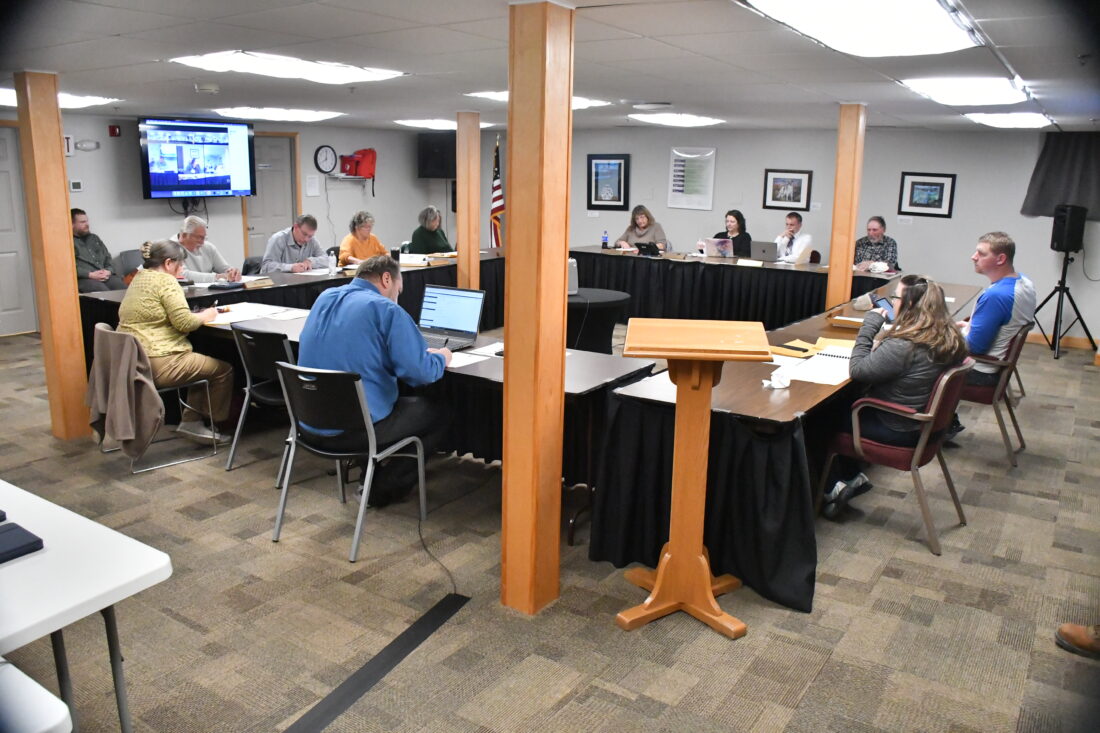
Sentinel photo by MIKE GOSS<br> The Juniata County School District Board of Directors have discussed the topic of cyber charter schools at numerous meetings.
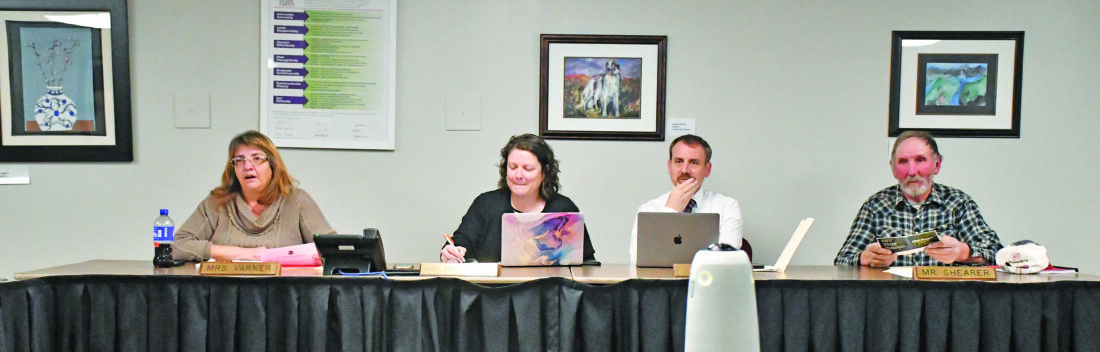
Sentinel photo by MIKE GOSS<br> Director Angela Varner (from left), Superintendent of Schools Christie Holderman, Assistant Superintendent of Schools Ben Fausey and Director Joseph Shearer have spoken about the effects that cyber charter schools have had on the Juniata County School District’s finances.
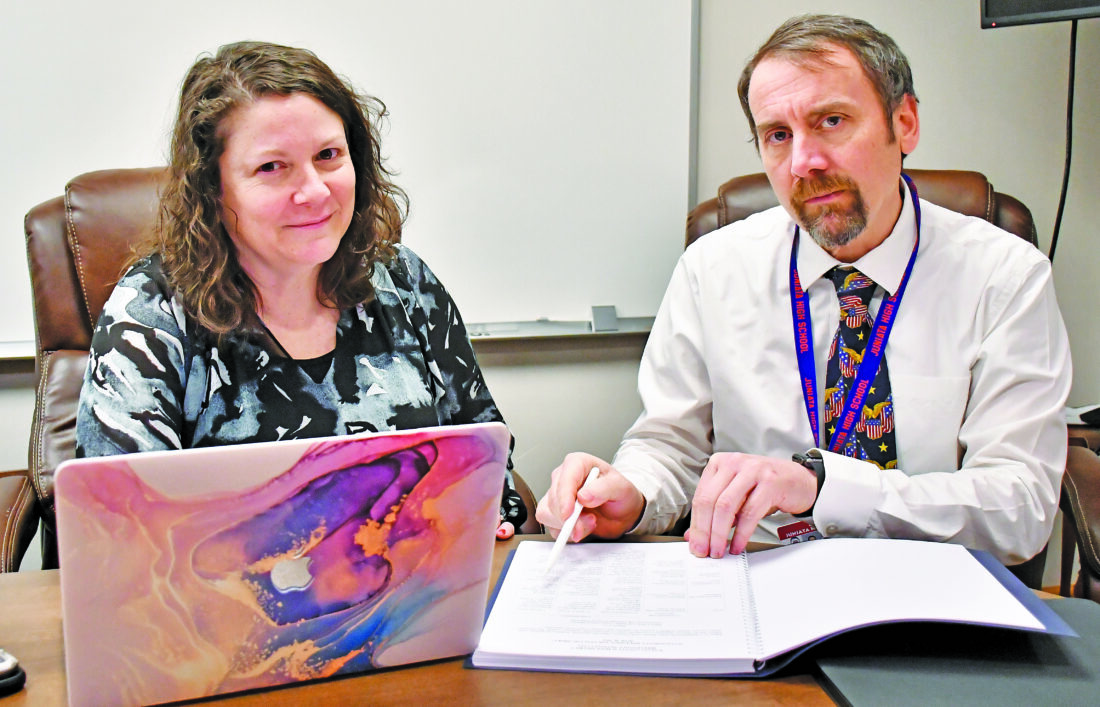
Sentinel photo by MIKE GOSS<br> Juniata County School District Superintendent of Schools Christie Holderman (left) and Assistant Superintendent of Schools Ben Fausey plan to promote the Juniata County Virtual Academy.
Sentinel photo by MIKE GOSS<br> The Juniata County School District Board of Directors have discussed the topic of cyber charter schools at numerous meetings.
Sentinel photo by MIKE GOSS<br> Director Angela Varner (from left), Superintendent of Schools Christie Holderman, Assistant Superintendent of Schools Ben Fausey and Director Joseph Shearer have spoken about the effects that cyber charter schools have had on the Juniata County School District’s finances.
Sentinel photo by MIKE GOSS<br> Juniata County School District Superintendent of Schools Christie Holderman (left) and Assistant Superintendent of Schools Ben Fausey plan to promote the Juniata County Virtual Academy.
Trending
MIFFLINTOWN -- The Juniata County School District is gearing up to try and level the playing field with regard to cyber charter schools.
While there is not much the district can do with regard to the state's funding formula for cyber charters that sends millions of tax dollars from Juniata County public schools to its cyber charter counterparts each year, the district is working hard to retain those students for its own Juniata County Virtual Academy.
Effective July 1, Travis Quici will start as the virtual academy coordinator. District Superintendent of Schools Christie Holderman also said advertising campaigns will be launched to inform parents and students about the alternative education options that the district offers in an attempt to not only retain current students but attempt to regain students that left for cyber charters.
Quici also serves as the district's athletic director for both Juniata and East Juniata high schools. He will receive a stipend of $15,000.
The district sees the hiring as the first step in trying to turn the tide against cyber charters.
"If they knew their options, I think we can draw them back," Director Angela Varner said during the school board's regular meeting on June 18.
The district increased taxes this year but there is still a six-figure deficit. Tuition costs for cyber charters consume about 10 percent of the district's budget for the 2025-26 school year.
While the state is trying to pass reforms to overhaul its antiquated funding formula, the district isn't sitting around waiting. Their approach is retention.
"It's our Achilles heel," said Director Douglas Kline at the same meeting. "It's unsustainable on our current course."
Directors and administrators in the district held contentious budget talks, which could have been avoided with state reforms on cyber charters.
"We would not be having these discussions," Holderman said. "If we were to remove charter school tuition from our budget, we would not be raising taxes and we would have the financial means to take care of maintenance projects as well as provide enhancements to our educational programs. Charter school funding is unfair and puts undue financial burden on school districts across Pennsylvania."
"We would not be having a tax increase," District Business Manager Rich Meily added. "The amount we pay is calculated on our expenses and it's going to go up every year."
That's why retention and reform are so precious to the district.
Pennsylvania cyber charter schools receive more than $1 billion in taxpayer funding each year, money that should be used to educate students, hire teachers and support classrooms. Instead, millions are spent on questionable expenses with little oversight or accountability, according to the Pennsylvania Association of School Administrators (PASA).
The PASA and Education Voters of Pennsylvania spoke at the Pennsylvania House Education Committee meeting on April 25. Public schools must justify every dollar they spend, yet cyber charters operate with far less transparency -- diverting resources away from students while school districts are forced to raise taxes or cut essential programs, officials from the two groups contend.
This unchecked funding reform to ensure that taxpayer dollars are used for education, not waste, they added.
Dr. Sherri Smith, executive director for PASA, shared a statement sent to her by a school district: "We were just sent a grade report for a student who attends Commonwealth Charter Academy (CCA). This student currently has a F in Algebra, a D- in Career Planning, an F in Entrepreneurship, an F in Health and Physical Education, a D in Intro To Social Media, a D in Life and a D in United States History."
This student's cumulative grade point average is 0.5006. On his official transcript, it reads "Class Rank: 501 out of 3,656." Apparently, there are 3,000 ninth-graders at CCA who have worse grades than that.
"As a state, we should be very concerned about the ongoing issue of low performance and participating compliance of cyber charter schools," Smith explained.
Susan Spicka, of Education Voters of Pennsylvania, brought a monitor to the meeting that was given to her by a cyber charter parent whose child no longer wanted it. Apparently, the school does not require families to return them.
Education Voters of Pennsylvania has been working on cyber charter accountability for more than a decade. They contend cyber charters have a very long track record of failing to ensure that their students meet their potential and enter the workforce prepared for the jobs that will need to be filled in the years to come.
In a report, the two groups allege the average four-year graduation rate for a cyber charter is 65 percent compared with 88 percent in school districts.
In actual numbers, 2,339 cyber charter students dropped out of school during the 2023-24 school year, the two groups said. These are students who were enrolled in a cyber charter and left before graduation without transferring to another school.
"These young people are now adults who are trying to build a life for themselves without a high school diploma, which I think we can all agree, is going to be very difficult," Spicka said.
Which is why administrators and directors in Juniata County are stressing the alternative to students in a cyber charter to come back, or at least take the time to see what they have to offer.