
Trending
"Godzilla Minus One" strikes a harmonious balance between honoring the storied legacy of its predecessors and charting a bold new course for kaiju epics.
Growing up with the Godzilla franchise has been a journey of highs and lows, from the monumental impact of the 1954 Japanese original, which masterfully combined post-war anxieties with monster movie thrills, to the less revered entries like the 1967 "Son of Godzilla," where the franchise dipped into the absurd.
It is within this broad spectrum that "Godzilla Minus One" finds its footing as a thoughtful reimagining.
Toho Studio returns to the Godzilla franchise and thank goodness for that. The recent American versions have been lackluster.
As a kid, I spent my Saturday afternoons sitting in front of the television, as Godzilla towered over cities, laying waste to landscapes and taking on monstrous foes with an indomitable resolve. It was a world of clashing monsters and unearthly powers where, for 90 minutes, I was lost between terror and fascination.
This fascination began with the darkly intense "Godzilla" (1954), a stark allegory of the nuclear age that established Godzilla, Gojira in Japanese, as a symbol of destruction, an embodiment of nuclear power unleashed. An eerie, haunting masterpiece, unsettling and compelling all at once.
The original Godzilla remains a classic -- radiating raw power and dark intensity. Now, decades later, I sat down to watch the latest edition, bringing my love for the creature full circle.
Diving into the thick of the action sequence, "Godzilla Minus One," written and directed by Takashi Yamazaki, opens with a sequence that harks back to the energy of the original film. It was clear the director intended to hold onto that nostalgic aura, capturing the essence that made us fall in love with these colossal monsters.
Unlike the misstep of the "Son of Godzilla," which turned Godzilla into a mild-mannered giant lizard, "Godzilla Minus One" reminds us why these beasts were the stuff of nightmares.
The screenplay moves quickly, jumping between cityscapes caught in Godzilla's path of destruction and quiet moments of introspection for the humans fighting to reign in its terror. Every frame holds a sense of foreboding, and yet, there are moments of surprising tenderness that add depth to the narrative. It's a testament to the filmmaking prowess on display when a film can hold you in a state of simultaneous dread and hope.
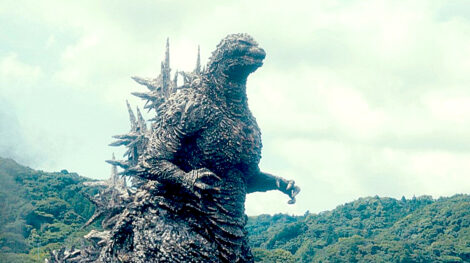
Technically, "Godzilla Minus One" is as monumental as its titular star. The special effects are jaw dropping and serve the story rather than overwhelming it. Godzilla's design is a nod to the beast we came to fear in 1954; less the odd mutations from the sequences, it retains its magnificent terror. Yet, the film takes it a step further,
leveraging technology to bring a renewed sense of
reality and scale to Godzilla's rampages.
Set in the bustling city of Tokyo, the film is a gripping narrative that combines elements of science fiction and horror, reminiscent of the original film.
The plot revolves around the waning days of the Second World War in 1945; our hero, a kamikaze pilot named Kōichi Shikishima, touches down his aircraft at a Japanese base on the remote Odo Island. Suspicion around his unexpected return arises when the base's leading mechanic, Tachibana, questions Shikishima's integrity, believing he shirked his duty under the guise of mechanical faults.
The same night, Godzilla launches an attack on the base. Overwhelmed by fear, Shikishima is rendered helpless, unable to shoot at the beast from his plane, and falls unconscious. As the only survivors of this horrific encounter, Tachibana blames Shikishima for his failure to act.
Shikishima returns to Tokyo to find that the bombings claimed his family. Struggling with survivor's guilt, he takes on a job as a minesweeper and provides for Noriko Oishi, a woman who has also lost her family in the attacks, and Akiko, an orphaned child Noriko saved. Amid this backdrop of heartache, Godzilla undergoes a transformation due to the United States' nuclear tests at Bikini Atoll, becoming an even more formidable force.
Fast forward to May 1947, when Shikishima and his crew receive the task of hindering Godzilla's advance on Japan. Despite causing substantial damage to the creature with an explosive, Godzilla's uncanny ability to regenerate overpowers their efforts. Following a deadly encounter with the creature in Tokyo, where Noriko barely survives, Shikishima swears vengeance against Godzilla for all the lives it has taken.
Kenji Noda, a former naval engineer from the minesweeper crew, hatches a plan to destroy Godzilla by luring it into a trap out at Sagami Bay, filled with Freon tanks and explosives designed to lower the water's buoyancy, sinking and crushing Godzilla with water pressure.
With a sequence of events marked by thrilling face-offs, ingenious tactical maneuvers, and shocking revelations, "Godzilla Minus One" leads us to a climax filled with suspense as Shikishima confronts the monster himself.
"Godzilla Minus One"
intertwines the threads of drama, human resilience, and action. The film leaves you pondering if man, or monster, is the greater threat to peace and harmony while hinting that the saga is far from over.
Another unique feature is its attention to human drama. While other Godzilla films often sideline human characters, "Godzilla Minus One" gives them significant screen time and depth. The characters are not there to react to Godzilla's actions, but they have their own stories, struggles, and triumphs, which add a new layer of emotional engagement to the film.
"Godzilla Minus One" is unique in its approach to the theme of nuclear disaster, both on a societal and individual level, making it a poignant commentary on the dangers of atomic power.
"Godzilla Minus One" is a triumphant return to form for the Godzilla franchise. It demonstrates that big-budget monster movies can hold their own by relying on engaging stories and well-executed action scenes, all while staying true to their source material. It's a love letter to the past while also pushing the franchise into the future--a delight for Godzilla lovers and newcomers. It is a film that respects its roots while also looking forward to the future, making it a must-watch for both old fans and new.
Godzilla Minus One can be viewed on Xfinity Pay Per View.