
Lesson learned: New outdoor classroom space will be buzzing
Trending
MIFFLINTOWN -- Riley Shertzer was trying to teach her Juniata High School students a lesson in biology, while creating a new outdoor learning space for the rest of the school.
"Most of the kids do not realize how important pollinators are to day-to-day life," explained Shertzer, who teaches advanced biology at Juniata. "They also didn't know that one of every three bites of food that we consume comes from pollinators."
They know now. The effort from pollinators produces many fruits, vegetables and seeds. Pollinators are not only necessary for our food but support the food and habitat of animals.
Juniata's new "Pollinators in the Classroom" outdoor learning space, which was completed at the end of the school year, will focus on pollinator habitats affected by climate change.
A pollinator is anything that helps carry pollen from the male part of the flower (stamen) to the female part of the same or another flower (stigma). The movement of the pollen must occur for the plant to become fertilized and produce fruits, seeds and young plants. Some plants are self-pollinating, while others might be fertilized by pollen carried by wind or water.
Still, other flowers rely on insects or animals - such as bees, wasps, moths, butterflies, birds, flies and small mammals including bats - for pollination.
Healthy ecosystems depend on pollinators. At least 75 percent of all the flowering plants on Earth are pollinated by insects and animals. This amounts to more than 1,200 food crops and 180,000 different types of plants - plants which help stabilize the soils, clean the air, supply oxygen and support wildlife.
Pollinators even help to stimulate the economy as honeybees contributed more than $19 billion to crop production in 2010, while pollination by other insect pollinators contributed to nearly $10 billion of crop production.
The outdoor space consists of a podium with a cabinet that contains a whiteboard and benches that can be transformed into desks or picnic tables. Funding for the project came from a grant from the Department of Environmental Protection, with the assistance of Mindy Musser of the Juniata County Conservation District.
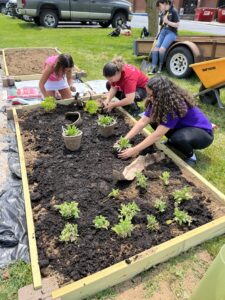
Crushed stone was poured to serve as a floor for the classroom. The space is surrounded by four raised flower beds with native plants and shrubs which the advanced biology students maintain this summer. Final plantings will be completed when school resumes in the fall.
"Climate change has really affected the pollinators and created a lack of habitat," Shertzer said. "We installed the pollinator garden so students could observe the different species in pollination."
The classroom would be available to use year-round for outdoor activities. Shertzer's students plan to continue to add elements to the project as it grows.
"The idea is to continue to expand it year-to-year," she added.
The pandemic was quite challenging for teachers and students, creating an outdoor classroom was a great idea, Shertzer said. With this change in learning, it's crucial to reconnect with nature from a fresh perspective during development.