
History of the Logan Guards shared at Rotary
Trending
BURNHAM -- History has its roots in the people who came before. Their stories and the impact they made fill history books and provide legends.
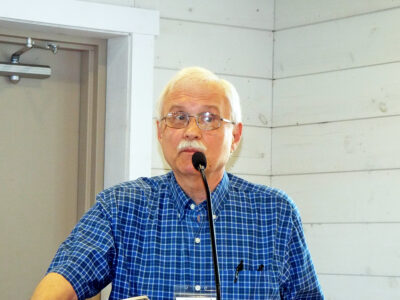
In April 1861, the Logan Guards made history in Lewistown and throughout the nation. The story of the Logan Guards was told Tuesday at Rotary Club of Lewistown's weekly meeting by the President of the Mifflin County Historical Society, Forest Fisher.
On April 12, the Confederate attack on Fort Sumter in Charleston, S.C. marked the beginning of the American Civil War. Within days, the Logan Guards, named after Chief Logan, responded to President Abraham Lincoln's call to defend the north. The Guards were led by Capt. John B. Selheimer.
"The Logan Guards were part of five companies of men," Fisher said. "There were five groups from Pennsylvania."
The groups became the 'Five First Defenders.' They included regiments from Lewistown, Allentown, Reading, and two from Pottsville.
"The Logan Guards were the Civil War's first defenders from Lewistown," Fisher said.
Formed in 1858, the group was a volunteer militia and a forerunner of the National Guard.
When the war officially started, their duty was clear.
"President Lincoln called for 75,000 volunteers to rush to Washington, D.C. to protect the Nation's Capital," Fisher said. "The Logan Guards were ready like the minutemen of old."
The message sent back to Lincoln was brief but reassuring.
"We are coming," was the reply from the Guards.
The Guards departed from Lewistown by rail on April 16. They traveled to Harrisburg and on to Baltimore before the final march to Washington. With Capt. Selheimer leading the way, the Guards were met by resistance from southern sympathizers and pelted with stones before reaching their destination.
"President Lincoln shook their hands and gave them their rifles," Fisher said. "Those men remembered that day for the rest of their lives."
On April 30, the Guards moved to Fort Washington, about 15 miles from the Capital on the Potomac River. Drilling from dawn to dusk, they received their new uniforms in late May.
By the end of July, 1861, the Logan Guards were welcomed home to Lewistown. Some members re-enlisted and saw action in a few of the Civil War's most famous battles, including Antietam and Gettysburg. Though some of its members did march into combat as part of other federal regiments, the Logan Guards as a collective unit, did not see combat action during the Civil War.
The Logan Guards' march into history has been recognized with honors on the national, state and local level. Several plaques detail their call to service and the Soldiers' and Sailors' Monument in Downtown Lewistown includes the Lincoln Stone, a stone from the Springfield, Illinois tomb of President Lincoln.
The history of the Logan Guards is well-documented, and as Fisher often says, "History is our story. Pass it on."