
‘When the Doctor Rode in a Gig’
Book describes the life of a country physician in Juniata County
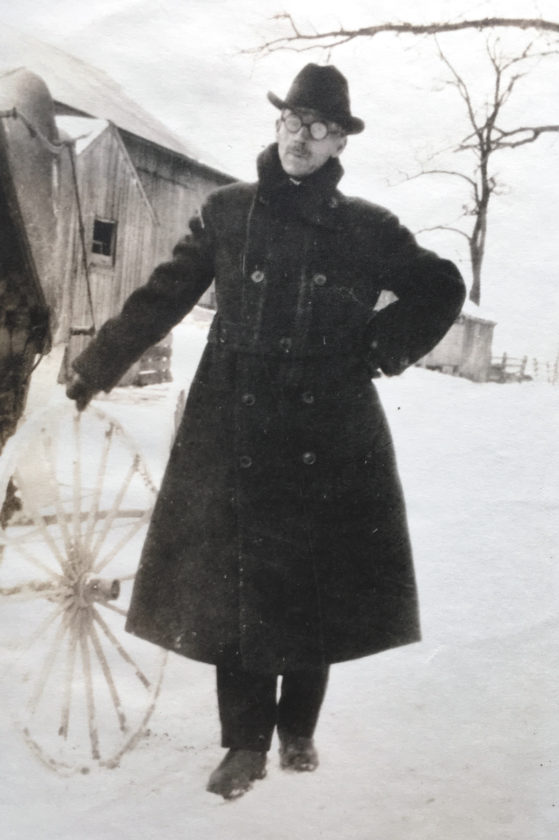
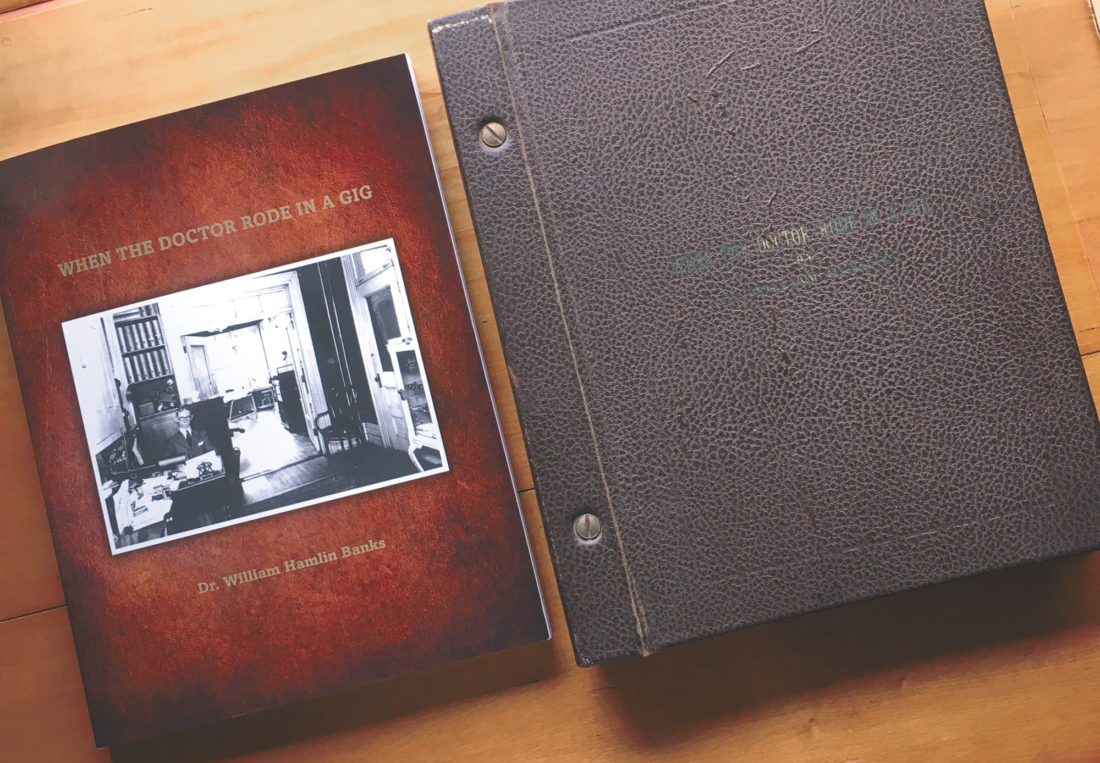
Sentinel photo by JANE CANNON MORT<br> There are only five copies in existence of the original book by Dr. William Hamlin Banks, right, but family member Virginia Banks had the memoir reprinted, and the book is for sale as a fundraiser for the Juniata County Historical Society.
Sentinel photo by JANE CANNON MORT<br> There are only five copies in existence of the original book by Dr. William Hamlin Banks, right, but family member Virginia Banks had the memoir reprinted, and the book is for sale as a fundraiser for the Juniata County Historical Society.
Trending
MIFFLINTOWN -- Most anyone who has lived in Juniata County for long has probably been a patient of Dr. Banks. Or at least their parents, grandparents, great-grandparents, and maybe even their great-great-grandparents, have.
That's because several generations of men in the Banks family have practiced medicine in Mifflintown -- since the mid-1800s, until the 1980s.
If anyone could explain what life as a country doctor was like, any one of the Drs. Banks could. And one did. His story is now shared in a book that family members had printed, donating virtually all of the copies to the Juniata County Historical Society to sell as a fundraiser.
Dr. William Hamlin Banks, wrote his memoirs sometime between 1934 and 1947, and had only five copies made -- one for each of his children, Dr. Robert Parker Banks, Jane Banks Ely, Kathryn Banks Richardson, William Hamlin Banks Jr. and Hugh McAlister Banks.
It was Virginia Banks, wife of the most recent Dr. Banks, who spearheaded the effort to share the memoirs with the public. Her husband was the author's grandson, the well-known late optometrist Dr. Robert P. Banks Jr.
Virginia said she learned of the existence of the memoirs from John Richardson, the son of Kathryn, one of the author's daughters.
"When he heard we were having the sale [of the family home on Route 35, Washington Avenue, Mifflintown], he called and told us to look for a book that [Banks] wrote and gave one to each of his five children," Virginia said.
She then visited Richardson at his home in New York and saw the copy that had been given to his mother. Knowing what it looked like, Virginia then found her family's copy among boxes of Banks family belongings stored in her basement.
"When I sat down and read it, I thought there was very interesting historical information about Juniata County in it," Virginia said. That's when she made the decision to have the book printed and offer it to the historical society to sell.
The large format trade paperback book contains nearly150 pages of the doctor's memoirs -- along with a number of pictures, some of which are colorized. Banks writes in a simple but poetic style that reflects his extensive education and intimate knowledge of Juniata County and its people. He is opinionated and doesn't shy away from expressing those opinions, always backed-up with anecdotes of real-life experiences, and some poetry and Biblical references as well.
The books begins with a bit of biographical information and pictures, some poetry, some details about Happy Hollow School, where Banks was a student, as well as his memories of the playgrounds and swimming holes of his childhood.
But the bulk of the book describes the life of the country doctor. Its chapters deal with it all, some in gruesome detail -- accidents, outbreaks of smallpox and typhoid fever, common diseases and their remedies, the effects of drug and alcohol addictions, suicide attempts, operations, dealing with snake bites, the difficulty of finding and retaining nurses, harrowing nighttime house calls, patients reluctant to pay or offer adequate thanks, miraculous recoveries, the hazards of visiting the homes of patients who own less-than-friendly dogs, the need to intervene in domestic disputes, and on and on.
But almost glaringly omitted is much discussion about births, save for an entire chapter dedicated to the doctor's perilous travels through a horrendous snowstorm to fulfill a promise to an expectant mother.
Virginia Banks may have an explanation for that.
She said that also among the author's belongings she discovered a record book solely dedicated to births. There are notations about every birth to which the doctor attended -- some including the weather conditions and efforts taken to make it to the patient's home. Virginia is having the birth record book copied and laminated in such a way that viewers may flip through it to look for familiar names. She expects to donate it to the historical society in hopes that it be displayed at the Tuscarora Academy next summer.