
Trending
UNIVERSITY PARK -- No growing season is without challenges, but this year is especially challenging with the rains and humidity that have been present. Weeds are having a great year, much to the chagrin of gardeners and farmers. Even with proper weed management tactics, soil moisture from storms and rain events are allowing weeds to continually germinate.
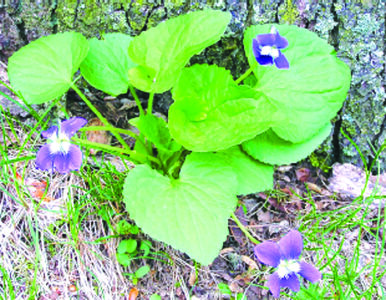
Wild violet has been the subject of several phone calls and walk-in customers to the Extension office this season. While the bloom can be pretty in the spring, wild violet is an aggressive weed that can take over lawns and other turf areas such as sports fields and cemeteries.
It is a perennial weed that has thick, branching rhizomes and a waxy leaf surface. Rhizomes are underground stems that form roots and shoots. They help the plant to store food reserves and overwinter successfully. Because of these rhizomes and a waxy surface, it is hard to eradicate. In addition to rhizomes, violets bloom in the spring and then set seeds which germinate and give rise to new plants.
Removal by hand or digging is not effective because rhizomes left in the soil can allow the plant to survive. Established turf stands with proper fertilization may slow the spread of wild violet, but it will not eliminate them.
Herbicides containing triclopyr provide the best control of wild violet. Even using this active ingredient, repeated applications over multiple years may be required for satisfactory control. Triclopyr can be found in stand-alone generic formulations. However, more commonly it is found in pre-mixed formulations with other broadleaf herbicides such as 2,4-D and dicamba.
All of these herbicides are selective herbicides which means they only kill a select group of plants. In this case, broadleaf weeds and plants will be controlled, and grasses will not. A nice list of weed control products for wild violet is provided in an article written by Penn State researchers. You can easily find this article on the Internet by searching for "wild violet in turf psu."
Always follow the label directions for the product you have on hand. If you have questions about this weed or other horticultural questions, please email me at lxf339@psu.edu.