
Sacrifices made to end America’s Civil War
Trending
In researching a previous article on Gettysburg and how big this battle loomed over the United States and how it also defined the beginning of the end of the Civil War. Looking deeper into that battle an oft overlooked part of it is the aftermath, and what we know of that is in many cases from the Union viewpoint. Those three days at Gettysburg took 3,155 lives and 14,529 wounded Union soldiers and 3,903 lives and 18,735 wounded Confederate soldiers, but at the end for the South, came retreat. Retreat back to the South after their northern invasion. Retreat after defeat. Retreat with what was left of the army and the wounded. Retreat after a major recognition at that time, that this was probably the turning point of the Civil War. Indeed it was.
As then, it is important that we recognize the sacrifices given to protect our way of life and form of government. This war corrected the injustice of slavery and preserved our way of life and institutions of government. We must always preserve our democracy as it is in elections when we see efforts and attempts to destroy. Let us remember the sacrifices made and promises kept as we continue to keep our nation on track.
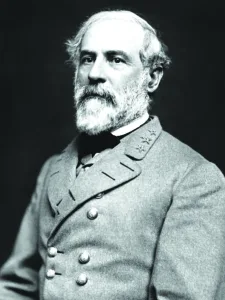
Robert E. Lee said after Gettysburg, "Yes, it has been a sad, sad day to us. We must now return to Virginia; as many of our poor wounded as possible must be taken home…" [1] There were roughly 18,735 Confederates wounded during the battle. Approximately 6,800 would be left behind, approximately 11,000 to 12,000 wounded would be moved, left, or retreat with the Army.
Written by a Union soldier:
"Like sheaves bound by the reaper, in crevices of the rocks, behind fences, trees and buildings; in thickets, where they had crept for safety only to die in agony; by stream, wall, or hedge, where the battle had raged for their weakening steps could carry them, lay the dead. Some with faces bloated and blackened beyond recognition lay with glassy eyes staring up at the blazing summer sun; others, with faces downward and clenched hands filled with grass or earth which told of the agony of the last moments, here a headless trunk, there a severed limb; in all the grotesque positions that unbearable pain and intense suffering contorts the human form, they lay. All around was the wreck the battle storm leaves in its wake-broken caissons, dismounted guns, small arms bent and twisted by the storm or dropped and scattered by disabled hands; dead and bloated horses, torn and ragged equipment and all the sorrowful wreck that the waves of battle leave at their ebb; and over all, hugging the earth like a fog poisoning every breath, the pestilential stench of decaying humanity." [1]
That soldier writes enough that this article could, and maybe should, end here - but that would be a disservice to those who would leave on the Confederate side to get home. Let us take a moment to compare that letter to one written by a Confederate soldier:
Dear Mother,
For three days we have fought this battle. What horrors I have been a part of, experienced and seen. I have seen enough dying, destruction, maiming, groaning, and crying for more than one life even though I am only sixteen years. But I have survived with a few wounds that won't claim my life but, in many ways, I wish I never had the opportunity to be a part of this or to have survived.
Our battles here in this small town called Gettysburg has claimed many a good man and I have heard that in three days of fighting we lost almost 4,000 killed and two to three times that number wounded. We don't know how many are missing or prisoners of war.
Too many of our good southern boys were killed. I have learned not to make close friends because it is hard to see them suffer and watch many an old friend die. Many have lost a leg or an arm - others will lose their sight. Walking past the hospital tent where the surgeons are plying their bloody trade are piles of bloody arms, legs, fingers, and hands, coupled with the cries, groans and screams as they cry out for the pain to stop, for water, a quick prayer to their creator to die, or calls for their mother. The heat and stench are horrendous and unbearable. I cannot walk among the wounded looking for friends without slipping in blood on the ground or tripping over a limb or body. Close by I can sometimes hear the quiet mummer of a minister or priest giving absolution and comfort to those who prepare and hope to soon reach their peace-anything to stop the suffering.
There are a lot of dead horses everywhere and they along with the dead soldiers are beginning to bloat. Yesterday, the 3rd, was hot and our wool uniforms we would like to have discarded, but it was necessary to keep them because of our personal belonging, uniform color and our ammunition belt and haversacks over the outer garments, but I will tell you it was very hard marching across a mile of open fields broken up by split rail fences that we had to cross to get to the Union lines. The sweat going into my eyes while marching fell more like blood which I could feel pumping throughout my who body. Our artillery gad pummeled their positions, or so we had hoped, but no matter, we had the fever. We were Granny Lee's boys, and we were going to win this fight - it was time to call the Union boys to task. Gen. Lee is the bet there is and all agreed we'd follow him and his orders into hell if need be - and we did on this day. It was all so loud that many of us still cannot hear right. The smell and smoke of burning gunpowder, the yells of "By the Quick Step - Charge Boys! Charge!!" And into hell we went. Union guns were not taken out, and they fired well into us opening wide gaps as I saw other men fly or get blown apart.
Since your letter of the last received 2 weeks ago, I have not seen our neighbor who joined the cavalry. I hope he is not here but fear he is as Gen. Stuart has arrived.
I will close for now as I am exhausted, hot and we need to find where our mess is. Pray that we will leave this place and this war. Hopefully, we will march away tomorrow. If feels like rain. Your dutiful son." [2]
A soldier could have written this description to his mother describing the last of the three days' battle at Gettysburg. It was without a doubt a horrendous, violent three days culminating with Robert E. Lee's Army of Northern Virginia's magnificent charge against the Army of the Potomac that would forever be known as Pickett's Charge. Fifteen thousand men on the Confederate side, 12,500 on the Union. That charge would have Robert E. Lee witnessing a major defeat in what he hoped would have been a tremendous success.
The Southern states, where most of the war had been fought, had been depleted in wagons, horses, grain, resources, and food. Tremendous suffering was inflicted on both sides, but for the South it was more momentous in losing all the resources their army needed to survive, as well as depleting the southern farmer of his means of survival such as grain, horses, wagons, and cattle. All of those things could be found in Pennsylvania. It was thought by Robert E. Lee and President Jefferson Davis of the Confederacy, that the War needed to be taken North, to inflict suffering there while giving the south time to recover. The citizens above the Mason-Dixon line were also tired of the war and it was hoped they would be instrumental in pressuring the Government to end it.
This was planned to put tremendous pressure on the U.S. Government and to convince the President of the United States, Abraham Lincoln, to end this war and allow the Southern States to be independent. But that hadn't happened.
As Lee and Davis contemplated that northern invasion, the commanding General for the Army of the Potomac had changed on June 28, 1863, to George Meade, someone who Lee thought would be cautious, take his time and be deliberate. This was not the case or even if it were, that ended when the two armies collided at the Lutheran Seminary on July 1, beginning the Battle of Gettysburg.
Now it would become Robert E. Lee's primary responsibility to preserve his army to continue the fight. Without question, his army was still a viable fighting force. A fighting retreat would be necessary, but it would need to be quick, orderly, and effective without the Army of the Potomac being able to follow up and catch them in retreat.
The fight must go on....
Lee would use an ancient tactic written about by Karl Von Clausewitz in his 1832 book, "On War" by effectuating a fighting retreat. To do that Lee must fight if necessary to get to safety, and that meant getting to, and across, the Potomac River and back into Southern territory.
Most of us are aware there was a battle in Gettysburg during the Civil War that lasted three days. This article begins with the less well-known - preparation for the retreat from Gettysburg, in many ways it was as horrendous as the three days of battle.
The retreat alone would demand much of Lee and his officers. This is still a large viable army that he doesn't want caught unprepared on their way back to the South to re-condition and rebuild.
Lee calls on Brigadier Gen. John D. Imboden to employ his cavalry to protect the retreat.
"All of the quartermaster subsistence, and ordinance trains, together with thousands of sick and wounded proposed a burden to Lee, and he also had on his hands 5,500 Union Prisoners and wounded with him. They will need to be carried in wagons. Among the prisoners were also civilians from Gettysburg who would know of the condition of the Confederate Army." (3)
Early July 4, a message was sent to General Meade of the Union Army to exchange prisoners of war. Lee did not want to feed union prisoners as he was barely able to feed his own. General Meade refused two hours later. (4)
Lee also wanted Imboden to take the shortest route, which would be the Fairfield Road to Williamsport, Maryland just South of the Lutheran Theological seminary, a total of eight miles. The retreat would be much more involved than that.
This would be comparable to moving a city of close to 75,000. After Gettysburg, the Confederate Army being a viable Army, would need to take in addition to the prisoners and wounded, the animals, wagons, pontoons, artillery, ammunition, water, food, tents, canvas and more, while facing the lack of food, clothing, shoes and little medical care or medicine. For the most part all would either walk, or ride in a wooden wagon without springs in the July heat.
Assigning military protection, the order of who goes first, as well as the routes, would need to be decided by Gen. Lee to effectuate the retreat. The journey begins.
To be continued....
Footnotes
Kent Masterson Brown, Retreat from Gettysburg, UNC Press, 2005, USA p.83
IBID
IBID, pp 64,65
IBID p. 108