
Trending
Winter is just around the corner. Between school closures, power outages, and icy roads, just getting through the day can become a struggle. When our usual routines are disrupted, the local groups and organizations we rely on are under more pressure than ever to keep their services running.
In these moments, a fast internet connection isn’t just a luxury. It’s how things get done. When a storm makes it impossible to visit a doctor or a classroom in person, the digital version has to work. At the Juniata County Library, we see this every day. A reliable signal is what keeps community support moving forward, even when the rest of the world has to stop and wait for the weather to clear.
For many people, winter isolation is about more than just being snowed in. It's the stress of being cut off from the things that keep life moving. When the roads are too dangerous to drive, the internet becomes the only way for a senior to make a vital doctor's appointment or for a student to keep up with school.
Across the country, libraries are shifting how they define their mission. They are not just places to check out a stack of books anymore. They’ve become the central point for keeping a community linked to the digital world.
Libraries have always been a safe, warm haven for the community. But what happens when the library itself is inaccessible? The Juniata County Library addresses this by loaning out mobile hotspots. What is a mobile hotspot? It is a wireless router that makes mobile Wi-Fi (wireless internet).
It provides wireless internet to your devices, including laptops, tablets, phones, smart TVs and devices running Android, Windows or iOS.
Did you know that you can borrow a mobile hotspot from the library? If you haven't heard, we lend out these small devices that, when turned on, give you Wi-Fi for any of your devices (as long as there is T-Mobile cell phone service where you use them). Because they are so popular and widely used, we currently lend out 55 of them. They were borrowed 367 times in 2025 and 316 times year to date.
Back in early 2017, a very forward-thinking board of trustee heard that another library loaned out these devices. They asked if I would consider doing the same at the Juniata County Library. We started loaning hotspots in April 2017 (we had only one at the time). Since then, they have circulated 3,637 times.
Here are some frequently asked questions we receive in relation to the hotspots:
How does it work? Simply turn on the device (instructions included) and go to the wireless screen on your device. On the inside case, the hotspot’s network name and password are what you will use/enter to connect to it.
You will get a charging cable to keep the device powered. We will also include an instructional brochure with screenshots.
Is there a data limit? Each cycle (one month) has a data limit of 20 GB to 25 GB. Once the data limit is reached, the speeds will slow down considerably (also known as throttling).
How do I reserve a hotspot? Hotspots can be reserved online with your library card, by phone or in person.
How long can I borrow a hotspot for? You can borrow for two weeks for $20, four weeks for $30 or three months for $85.
Visit our website for a complete FAQ page at https://www.juniatalibrary.org/programs-services/mobile-hotspots.
By essentially ‘loaning out’ the internet, librarians are keeping the lights of learning on in every single home they serve. It's a way to make sure resources are always available to those who need them most, no matter how low the temperature drops or how bad the roads get outside.
Book of the week!
If you are going to read one book, give this one a try...
"The Hollow" by Michael Connelly (Harry Bosch series book no. 26)
(New adult fiction: thriller, mystery, California, police procedural): 352 pages.
In a nutshell: My favorite fiction author is back, exploring Bosch's origin story.
Bosch isn't interested in his payout from the long-delayed settlement, which splits $4 billion among countless young people who were abused for many shameful years. He wants to donate his $350,000 to the real-life charity Hope in a Suitcase in the name of Charles Lamb, whose murder investigation never went anywhere. Even more, he wants to identify Charlie's killer and make him pay.
When his attempts to gather information on gang leader Nikolai Novak, who, as Nick Stokely was a violence-prone bully at MacLaren, Novak's goons swoop down on him, and so does the FBI, which has had Novak under surveillance for reasons Assistant U.S. Attorney Daniel Cutler won't share unless Bosch joins a task force and swears to keep its findings confidential.
The first demand is an easy call, but avid fans who've followed Bosch in Connelly's many novels or the TV series they've spawned will know that the second will never happen. Shut out of the investigation after coloring outside too many lines, Bosch slides effortlessly into a much less cold case: Gregory Talbot's killing of his estranged wife, Jennifer, a mere 25 years ago. As usual, both investigations turn not on establishing whodunit but on amassing evidence that will hold up in court and, in Novak's case, tamping down a national security disaster to boot. The final showdown between Novak and Bosch will make your heart thrum with vigilante pride.
Bottom line: Bosch draws on his strengths, crime-solving brilliance and an almost superhuman determination, to solve cases.
•••
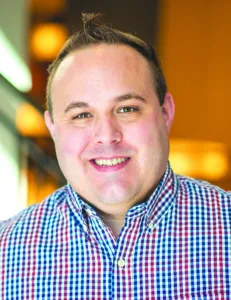
Vince Giordano has been the librarian and director of the Juniata County Library since 2015.